


 SIGN UP FOR OUR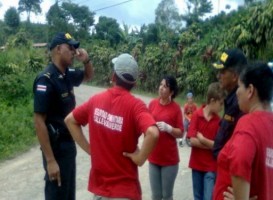
Reaching out to the community in San Ramon. Source: Fuerza Publica
Officials from the Ministry of Public Safety and Fuerza Publica are seeking assistance from law enforcement experts in Brazil and the Embassy of the United States of America to improve community police efforts and to combat corruption among their ranks. Costa Rica has been working towards the improvement and modernization of Fuerza Publica, which is the most visible force of the Ministry of Public Safety, for the last few decades. These two training and assistance initiatives are part of an overall effort to render quality protection services to the people of Costa Rica.
U.S. Embassy will Assist with Creation of Internal Affairs Department
The Ministry of Public Safety and the U.S. Embassy will work together in a special project that will implement reform and enhance controls against corruption within its police forces, which include Fuerza Publica, the National Coast Guard Service, the Tourism Police, Aviation Units, and more. This is a project supported by the Central American Regional Security Initiative (CARSI).
The Ministry currently utilizes three internal departments to fight corruption amongst its ranks: the Inspector General, Disciplinary and Legal Affairs, and the General Direction of Administrative and Finance Affairs. Costa Rica will receive assistance from the U.S. government through the Embassy that will combine current efforts into the new Internal Affairs Department, including moving towards a paperless office system. The goal is to improve transparency through efficiency.
Fuerza Publica Officials Travel to Sao Paulo for Training
Seven law enforcement officers from Costa Rica will travel to Brazil and receive training in the Koban System, a comprehensive method of community policing that was implemented to great success in Jardim Ranieri, which was once a scary favela but now enjoys reduced crime and police protection thanks to Koban. In fact, studies by the United Nations revealed that the Jardim Ranieri favela only records about three murders per year (link in Portuguese), thus making it now safer than some of the most upscale neighborhoods in Brazil
The Koban system consists of compact building structures smaller than a sub-precinct but larger than the private security boxes seen in neighborhoods like Rohrmoser in San Jose. The Japanese word Koban essentially means “police box”, and it is a system that has been in use in Japan since the 19th century, but it was reinvigorated in the 1990s with further community integration and spread out to other nations. Costa Rica and other Central American countries enjoy Koban training thanks to international cooperation treaties.
Fuerza Publica and other public safety entities have been engaged in fighting corruption and improving community policing. The Costa Rica Star has previously reported on Fuerza Publica’s efforts to police its own ranks and to send officers directly to the hearts of communities and offer support. These initiatives, along with visibility, foot patrols and traditional police go a long way in making sure people in Costa Rica can enjoy peace and safety.



