


 SIGN UP FOR OUR
 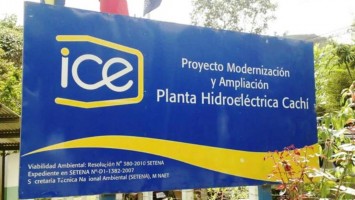 Even though ratings agency Moody’s recently downgraded sovereign bonds issued by the Central Bank of Costa Rica as junk, President Luis Guillermo Solis has been busy courting investors from the United States and is planning on visiting Canada soon for the same reason. Costa Rica plans to issue $1 billion more in bonds next year, and President Solis is still intent on gaining entry into the Organization for Economic Co-operation and Development (OECD).
Not all government-related debt from Costa Rica is poorly rated. As you can see from the Fitch Ratings press release below, bonds issued by the electricity and telecommunications giant Grupo ICE are holding up much better than those issued by the Central Bank:
Fitch Affirms Instituto Costarricense de Electricidad at ‘BB+’; Outlook Stable
NEW YORK–(Business Wire)–Fitch Ratings has affirmed Instituto Costarricense de Electricidad y Subsidiarias’ (Grupo ICE) foreign- and local-currency Issuer Default Ratings (IDRs) at ‘BB+’ as well as its national scale ratings at ‘AAA(cri)’ and ‘AAA(slv)’. The Rating Outlook is Stable.
KEY RATING DRIVERS
Grupo ICE’s ratings are supported by its linkage to the Sovereign rating of Costa Rica (FC and LC IDRs rated ‘BB+’/Outlook Stable by Fitch), which stems from the government ownership and government’s implicit and explicit support. The company holds strategic importance for the government given the growing demand of electricity in the country and government’s plans to increase renewable generation and to reduce exposure to fluctuations in fossil fuel prices. The ratings also reflect company’s diversified portfolio of assets, adequate financial profile, aggressive capital expenditure program oriented to increase renewable generation capacity and maintaining a strong market share position in the telecommunications business.
DIVERSIFIED ASSET PORTFOLIO
Grupo Ice is a vertically integrated monopoly in the electricity industry and the incumbent player in the Telecom industry in Costa Rica. The ratings reflect the company’s low business risk resulting from its business diversification and positive characteristics as a utility service provider.
Grupo ICE had an installed electric generation capacity of 2,159 megawatts (MW) (national capacity of 2,731MW) as of year-end 2013 and is the exclusive owner of the national transmission grid. The national electric industry includes private generation, municipal distribution and electric cooperatives that can generate energy in coordination with Grupo ICE or sell their energy to Grupo ICE. The company is expected to remain a leader in the telecommunications industry in the country, notwithstanding recent changes that opened the industry to competition. Although this will increase competition, it is also expected to enhance regulatory transparency. ICE’s market share in terms of subscribers was near to 100% in fixed telephony and 70% in mobile at 2013-end.
The company generated revenues and EBITDAR of USD 2,550 million and 853 million for LTM ended in June 2014, respectively (USD 2,647 million and USD936 million in 2013). The company’s electricity segment represented approximately 59% of total revenues in 2013 and the telecommunications division contributed the rest. Fitch expects ICE’s electricity business to increase its contribution given the current and future expansion projects, as well as relatively stable results in the telecommunications segment.
LEVERAGE DRIVEN BY CAPEX
Company’s leverage has weakened as result of the ongoing large capital expenditure program, which is mainly financed with debt. Fitch expects the company will be able to reduce leverage as new generation projects, such as PH Reventazon, become online in the next few years, absent of adverse changes in tariffs.
Grupo ICE reported consolidated debt of USD3.6 billion and a financial leverage ratio, measured as total adjusted debt-to-EBITDAR, of 5.6x as of June 30, 2014. Approximately 85% of total financial debt is denominated in U.S. dollars, which exposes the company to fluctuations in the exchange rate. In the first half of 2014, the company recorded a net non-cash loss, related to foreign exchange fluctuations, of approximately USD 240 million due to the depreciation of the Costa Rican Colon.
In the short-term, credit metrics could deteriorate as result of adverse weather conditions and a lag in regulated tariffs to incorporate the costs of thermal generation and net electricity imports. A further deterioration of the exchange rate of the local currency may also impact leverage ratios. These factors could reduce company’s ability to meet some financial covenants and its financial flexibility.
AGGRESSIVE CAPITAL EXPENDITURE PLAN
Grupo ICE’s capital investment plan is considered aggressive and could weaken the company’s financial profile, absent increased cash flow generation and adequate tariff adjustments. The company plans to invest approximately USD3.7 billion over the next five years in order to supply electricity to meet demand and maintain its leadership position in telecommunications in Costa Rica.
Going forward, leverage could increase consistently to over 6.0x if the company finances its capital investment plan heavily with debt and the revenues associated with these investments are delayed beyond the expected ramp-up timeframe or don’t received opportunely tariff adjustments. Grupo ICE expects to finance its investments with a combination of internal cash flow, debt, Build Operate and Transfer (BOT) transactions, project finance vehicles and operating leases.
HIGH EXPOSURE TO REGULATORY AND POLITICAL INTERFERENCE
Grupo ICE is highly exposed to regulatory interference risk given the lack of clear and transparent electricity tariff schedules. The company annually proposes to the regulator electricity tariffs for end-users; in previous years, the regulatory and political interference affected the tariff adjustment process.
Since 2013 tariffs are adjusted quarterly to reflect changes in fuel costs. This change had a positive effect on Grupo ICE’s working capital and reduces its exposure to hydrology risk. Formerly the regulator approved tariffs that do not fully recognized the company’s moderate exposure to fuel prices borne by its thermoelectric generation business (8%-10% of annual generation on average). The issuer is proposing to modify the existing tariff scheme to incorporate the costs of net electricity imports given ongoing adverse weather conditions.
The Telecom regulatory framework considers changes in tariffs and competition rules. Fitch expects that new regulations could enhance regulatory transparency. Nevertheless, telecommunications tariffs have been unchanged since 2006.
Despite the regulatory risk, Grupo ICE has managed to maintain relative stable cash flows. The company is also exposed to political interference given that the government appoints and removes ICE’s directors and executives, sets and approves the company’s tariffs, and regulates its budget.
RATINGS SENSITIVITY
–Grupo ICE’s ratings could be negatively affected by any combination of the following factors: sovereign downgrades; weakening of legal, operational and/or strategic ties with the government; or regulatory intervention that negatively affects the company’s financial performance;
–Grupo ICE’s ratings could be positively affected by an upgrade of Costa Rica’s sovereign rating, or if the company is materially isolated from government interference.
Fitch has affirmed the following ratings for Grupo ICE:
–Long-term FC IDR at ‘BB+’; Outlook Stable;
–Long-term LC IDR at ‘BB+’; Outlook Stable;
–Senior unsecured debt at ‘BB+’;
–Long-term national scale (Costa Rica) at ‘AAA(cri)’; Outlook Stable;
–Senior unsecured domestic long-term debt (Costa Rica) at ‘AAA(cri)’;
–Short-term debt at ‘F1+(cri)’



