


 SIGN UP FOR OUR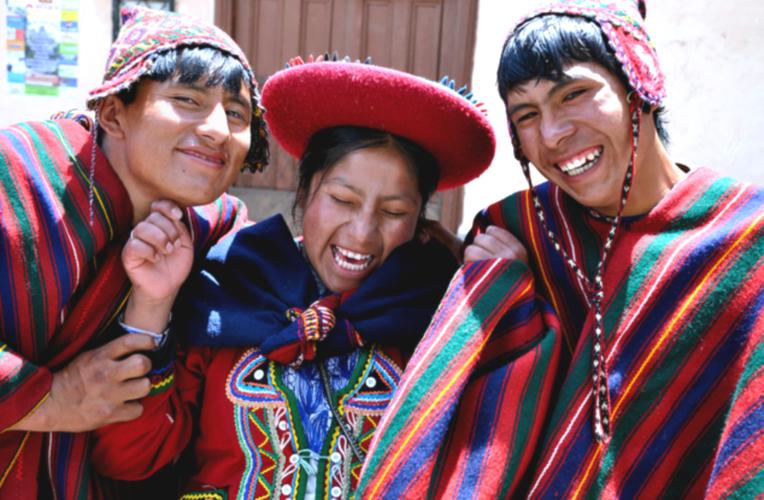
By Mauricio Costanzo, 2009 Flickr Creative Commons 2.0
By Carolina Cusirramos
Lima, Aug 27 (EFE).– Aware of the threat that climate change poses to their livelihoods, rural communities in Peru are dealing with global warming by using both traditional and scientific techniques discussed in a new book, “Lecciones para la Tierra” (Lessons for the Earth).
The book recounts 20 experiences from groups participating in a contest on adapting to climate change organized by the Environment Ministry, publisher Xabier Diaz de Cerio told EFE.
Diaz de Cerio said the book’s purpose was to inspire other communities to address climate change in their own farms and fields.
Among the case studies documented by journalists and photographers who visited communities in 13 Peruvian regions is that of “El coleccionista de papas” (The Potato Collector), the story of farmer Faustino Blas, who won first prize in the category of autodidacts.
Blas, who lives in the Andean community of Poque, in central Peru’s Huanuco region, was able to preserve 298 varieties of native potatoes, identifying those most resistant to frost to improve his fields’ production.
The peasant followed the tradition of the Andes’ first inhabitants, who domesticated the tuber through observation, and trial and error to boost the best varieties.
Through his exacting work and thanks to the award, Blas became an example for other communities affected by unexpected frost.
Another outstanding story is that of “Las hermanas que cosechan lagunas” (The Lagoon-Harvesting Sisters), Magdalena, Marcela and Lidia Machaca, who for the past 24 years have been applying their scientific knowledge to the collection of rainwater in Quipillacta, a community in the Andean region of Ayachucho.
Using techniques developed by pre-Columbian cultures, the Machaca sisters built a network of canals to collect rainwater and channel it toward natural reservoirs that the sisters have known since they were children but are now threatened by water scarcity.
The experiences collected in “Lecciones para la Tierra” stand out for their ingenuity, as is the case of peasant families who were able to obtain clean energy for domestic use by replacing firewood with goat dung as a fuel.
Other initiatives helped people recover water sources, renew forests, preserve crops and refit dwellings to keep the cold out.
The book’s production was sponsored by the Environment Ministry with support from the Swiss Agency for Development and Cooperation.
“Lecciones para la Tierra” was presented on Tuesday in Lima along with a photography exhibition illustrating the 20 experiences described in the book.
Agriculture employs more than 25 percent of Peru’s labor force and the sector is dealing with six times more drought, excessive rain and frost than in the late 1990s, the Environment Ministry said. EFE



