


 SIGN UP FOR OUR


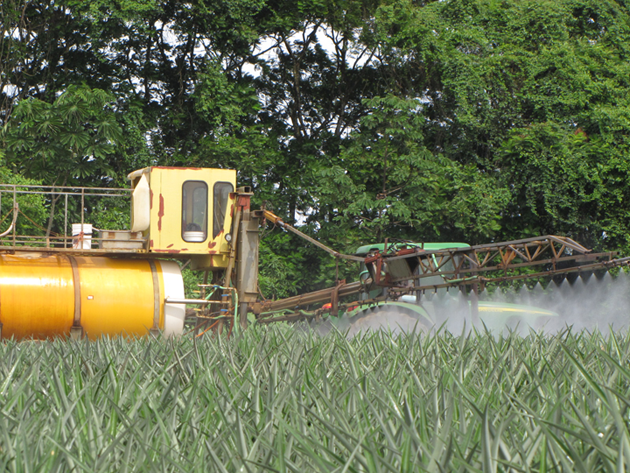
Costa Rica’s National Technical Environmental Secretariat (Secretaría Técnica Nacional Ambiental, Setena) recently gave the green light for increased pineapple production in Costa Rica’s southern region, a move that is troubling to environmentalists and indigenous groups whose protected lands in that region would be threatened by the intensive monoculture agriculture, reported Edgardo Araya, Broad Front (Front Amplio) Party legislator, this week.
The National Front of Sectors Affected by Pineapple Expansion (Frenasap) announced they have organized a protest for Monday, May 15 in front of the National Museum and along the boulevard leading to the Legislative Assembly.
The protest is mainly aimed against the expansion of pineapple plantations in the Southern Zone, and also includes related agricultural themes including the rejection of a registry for native plant seeds.
The pineapple situation is seen in the larger context of the region’s rich biodiversity and cultural wealth.
Protestors plan to march to the Ministry of the Environment (MINAE) to present a request to annul the environmental permit granted by Setena for the plantations.
Joining community residents and indigenous from the south in the protest will be tour operators, ecologists, university students, women’s groups, students, peasant cooperatives, representatives of Caribbean and northern communities also affected by pineapple production, and other Puntarenas communities, said Costa Rican Conservation Federation (FECON).
The planned Palmar Sur farm by the multinational pineapple Del Monte – Pindeco was granted an environmental permit in less than 20 days, according to FECON.
“The monoculture would be developed less than 500 meters from the center of Palmar Sur, putting at risk the health of the population with toxic agrochemicals that would be used in this type production,” said FECON.
The planned lands for pineapple growing are located less than 5 kilometers from the heart of the Térraba-Sierpe Wetland (HNTS, its initials in Spanish) established in 1995 as a protected area, which would also be threatened by contamination from agrochemicals such as bromacil and ametrine used in the production of pineapple.
In addition, the Delta del Diquís region, where Palmar Sir is located, is home to the UNESCO World Heritage Site which protects Costa Rica’s stone spheres, as well as nine other archaeological sites of the Diquís pre-Colombian culture.
Frenasap said they would submit a request to UNESCO for an assessment of the proposed agricultural activities on the Diquis archaeological site.
Protest organizers said they would also request the MINAE and the National Museum conduct their own independent environmental assessments in the Térraba-Sierpe river basin to determine the possible effects of pineapple farming in the lowland area.



