


 SIGN UP FOR OUR
Whereas last month, meteorologists saw a possible El Niño effect slowing down the formation of storms in the Atlantic-Caribbean region, they now say the probable lack of development of the phenomenon may bring on a heavier than usual hurricane season.
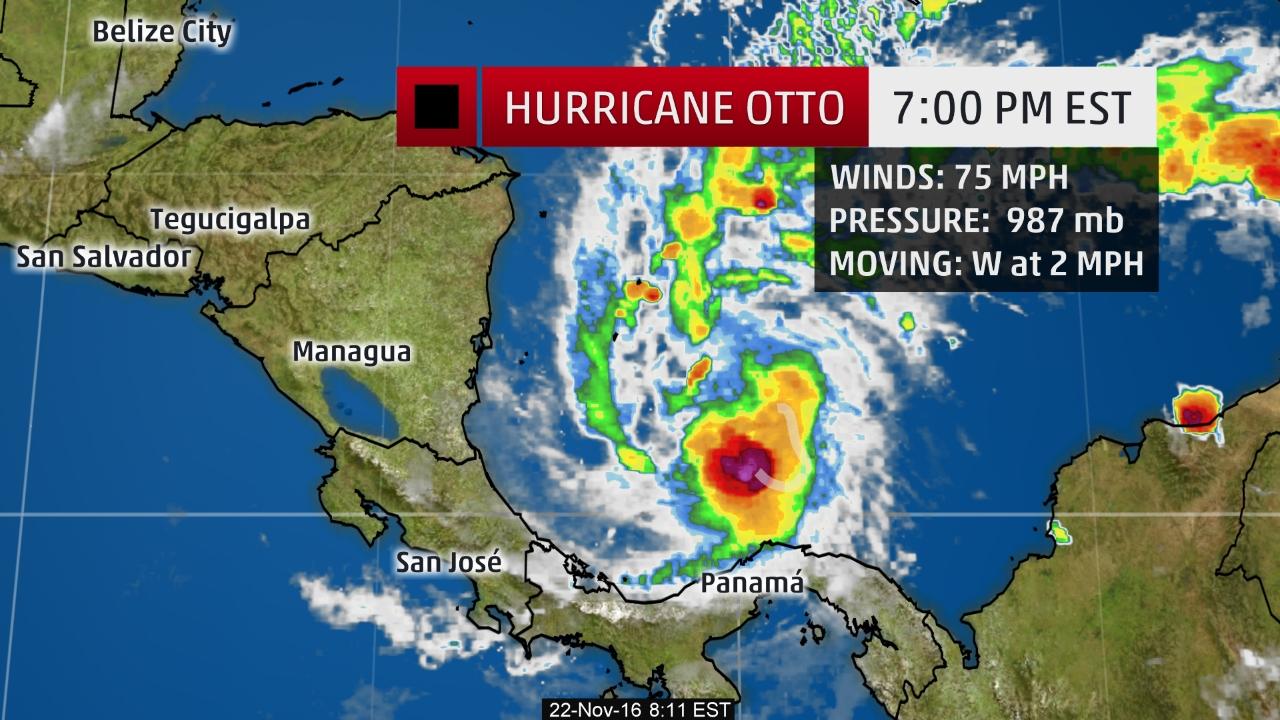
Last year brought the unusual late season hurricane – Otto – the first to touch land in Costa Rica in recorded history.
For the Atlantic, 2016 was the first above-normal season since 2012. The Atlantic saw 15 named storms during 2016 including 7 hurricanes (Alex, Earl, Gaston, Hermine, Matthew, Nicole and Otto), 4 of which were major hurricanes (Gaston, Matthew, Nicole and Otto).
According to the U.S. Department of Commerce’s National Oceanic and Atmospheric Administration (NOAA), for the 2017 Atlantic hurricane season – June 1 through November 30 – there is a 45 percent chance of an above-normal season, a 35 percent chance of a near-normal season, and only a 20 percent chance of a below-normal season.
Forecasters predict a 70 percent likelihood of 11 to 17 named storms (with winds of 39 mph or higher), of which 5 to 9 could become hurricanes (winds of 74 mph or higher), including 2 to 4 major hurricanes (Category 3, 4 or 5; with winds of 111 mph or higher). An average season produces 12 named storms of which six become hurricanes, including three major hurricanes.

These numbers include Tropical Storm Arlene, a rare pre-season storm that formed over the eastern Atlantic in April.
“The outlook reflects our expectation of a weak or non-existent El Niño, near- or above-average sea-surface temperatures across the tropical Atlantic Ocean and Caribbean Sea, and average or weaker-than-average vertical wind shear in that same region,” said Gerry Bell, Ph.D., lead seasonal hurricane forecaster with NOAA’s Climate Prediction Center.
Strong El Niños and wind shear typically suppress development of Atlantic hurricanes, so the prediction for weak conditions points to more hurricane activity this year. Also, warmer sea surface temperatures tend to fuel hurricanes as they move across the ocean. However, the climate models are showing considerable uncertainty, which is reflected in the comparable probabilities for an above-normal and near-normal season.
All three regions: the Atlantic, eastern Pacific and central Pacific saw above-normal seasons in 2016 according to a report generated at the end of last year’s season by NOAA scientists.



