


 SIGN UP FOR OUR


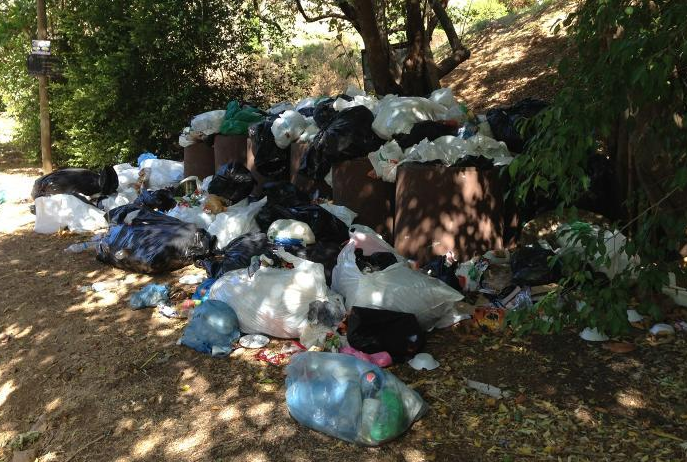
While Costa Rica is quick to tout its lack of military and “culture of peace,” the country’s growing gap between rich and poor points to gaps that breed injustice, exclusion and poverty. The breaches are often hard to see, but erode poor people’s quality of life and often deprive them of basic needs in a country increasingly divided.
Costa Rica recently ranked second in Latin America on the world Social Progress Index, and was found to be the most effective country globally in investing each dollar into welfare for its inhabitants, according to the index.
But analysts were quick to point out that behind the overall panorama lies a more complex reality.
“There are two Costa Ricas: one in the central region with high levels of progress, and the other that lives in rural areas and coasts, and along the country’s northern and southern borders,” according to Jaime García, senior researcher at the Latin American Center for Competitiveness and Sustainable Development.
Costa Rica ranks second this year in the region after Chile most notably for its gains over the past decades in important social areas such as health, education, social capital, among others. At the top level of social progress are 14 countries which are led by Denmark.
Costa Rica, ranked 28th worldwide with 81.03 points, has the lowest rate of death from infectious diseases in Latin America, with 22.25 deaths per 100,000 inhabitants, and ranks 8th worldwide on health and well-being – with low premature mortality from non-communicable diseases such as cardiovascular diseases, cancer, diabetes, chronic respiratory diseases, etc).
Areas that need improvement include personal security as the homicide rate ranks 105 out of 128 countries measured in the study at 10 deaths per 100,000 inhabitants. The country’s deaths from traffic accidents are even higher at 14 per 100,000 inhabitants.
Other weak areas include inadequate wastewater treatment, access to electricity, and underage marriage, on which the country ranks relatively low.
Costa Rica also needs to improve on access to information with Internet available to only 60 percent of the population versus 97 percent in Norway. Only 3.3 percent of people have connections higher than 10 Mbps found the study.
Finally, Costa Rica ranks 68 out of 128 countries on average years of education for adult women with only 10.98 years. Compared to an average of 15.7 years for an adult women in Canada, this area falls short as well.
“It’s a small country but with a lot of diversity,” continued García.”Not all Ticos live with high social progress,” he said, adding that quality of life and social progress lags far behind in coastal areas, especially the Caribbean, in many rural areas.
The index measures aspects of daily life not captured by strict economic measures such as gross domestic product, and is based on a range of social and environmental indicators that give a more three dimensional glimpse of countries’ social progress.
The index looks at basic human needs, basic welfare, and opportunities, and includes data for 128 countries on 50 indicators, thus covering 98 percent of the world’s population.
The United States ranks 10 plans higher than Costa Rica in 18th place and with an overall score of 86.43.



