


 SIGN UP FOR OUR
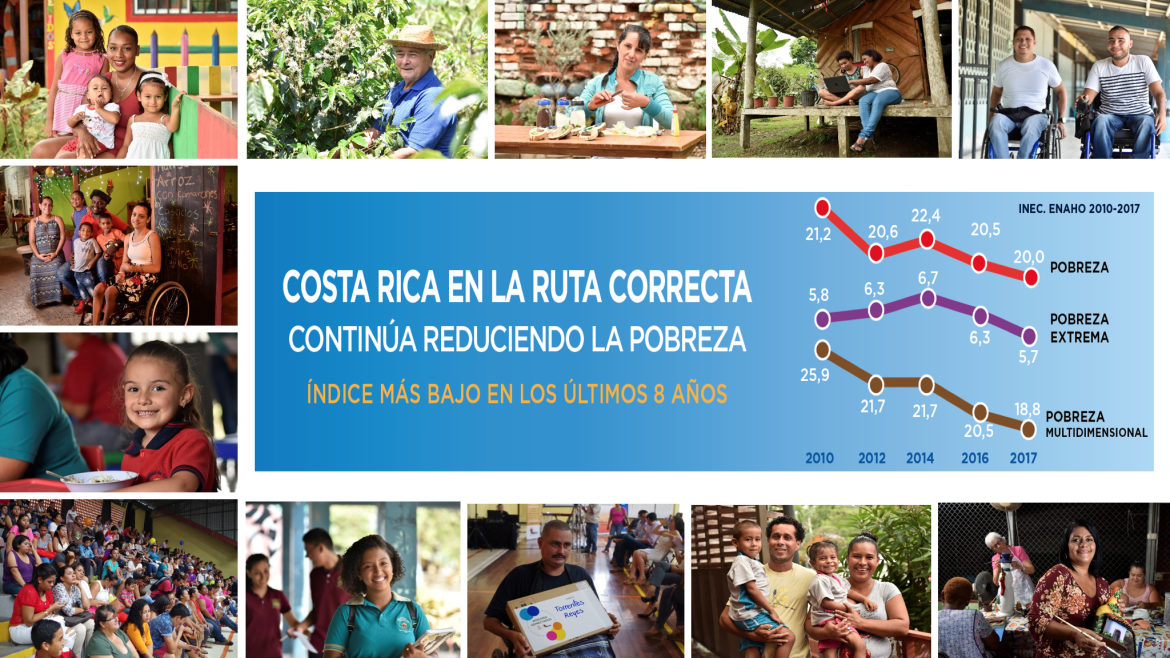
According to the last National Homes Survey carried out by the Statistics and Census Institute, there’s been a reduction in the number of homes in extreme poverty and rural, urban and multidimensional poverty in comparison to the years 2015 and 2016.
The survey was carried out with a sample of 10,712 homes in different areas of the country.
The study shows that 8,341 Costa Rican homes are now out of extreme poverty while 2,039 homes are out of poverty. This means that homes considered in the line of poverty went from 22.4% in 2014 to 20% in 2017; while homes in extreme poverty went from 6.7% in 2014 to 5.7% in 2017.
Multidimensional poverty went from 21.7% in 2014 to 18.8% in 2017.
All registries of total national poverty measured by income, extreme poverty and the multidimensional criteria, show the lowest numbers registered in the past eight years.
At the same time there is a reduction in rural poverty which went from 30.3% in 2014 to 24.1% in 2017.
These are all the result of the national strategy “Puente al Dessarrollo” (Bridge to Development), a public policy that the efforts of different government entities and institutions seek the reduction of poverty and extreme poverty through four main technical instruments: social maps that help locate the families in need; social agents, who are responsible for selecting and following up with the families; the multidimensional poverty index, which measures in a comprehensive manner the needs of the families; and finally the National System of Information and Unique Registry of Beneficiaries of the State, which helps maintain the transparency of the work being done, where the resources are going and shows where the efforts of social mobility need to be focused.



