


 SIGN UP FOR OUR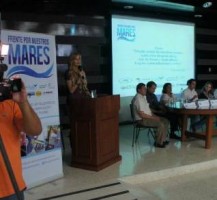
Source: Facebook
Sala Cuarta (Constitutional Hall) has issued an order to the Costa Rica Fishing Institute (INCOPESCA in Spanish) and the Secretary of Environmental Affairs (SETENA) to provide, within three working days, an explanation for the lack of environmental impact studies on the practice of shrimp trawling.
The order was issued by the Court after a plea for relief was filed by Frente por Nuestros Mares (Front in Support of our Oceans), a non-governmental organization (NGO) that has recently voiced its support for the release of the controversial founder of the Sea Shepherd Conservation Society, Paul Watson. Mr. Watson is currently in Germany fighting an extradition request from Costa Rica due to a 2002 incident involving a vessel in command of Mr. Watson and a Tico fishing boat.
The plea for relief filed by the NGO aims to put a stop to shrimp trawling in Costa Rica, a practice that the NGO considers destructive to nature. The organization cites results from scientific investigations as support of its claim.
In addition to the request for environmental impact studies, the Court has also ordered an immediate stop to the issuing of shrimp trawling licenses in Costa Rica by INCOPESCA.
Although Frente por Nuestros Mares is a relatively new NGO, it has gained attention due to the support of Leonora Jimenez, a Tica supermodel, international beauty queen and entrepreneur who has graced the runways of Paris fashion shows. Support by celebrities and members of the glitterati has brought positive results to NGOs like the Sea Shepherd Conservation Society.
This is the second time this month that shrimp trawling comes into focus in Costa Rica. On May 20th, The Costa Rica Star reported on the lifting of the ocean-caught shrimp import ban by the United States. That import ban applies to nations that have not adopted comparable sea turtle protection programs that require and enforce the use of Turtle Excluder Devices (TEDs). These devices are described by the U.S. National Oceanographic and Atmospheric Administration (NOAA) as a grid of bars with an opening either at the top or the bottom of the trawl net. The grid is fitted into the neck of a shrimp trawl. Small animals such as shrimp pass through the bars and are caught in the bag end of the trawl. When larger animals such as marine turtles and sharks are captured in the trawl, they strike the grid bars and are ejected through the opening.
Initial TED designs did not allow for the release of larger leatherback turtles, and thus TED openings in were later redesigned to address this problem. It took more than two years for Costa Rica to comply with the United States requirement for shrimp imports, and the new order by Sala Cuarta could once again affect the shrimp trawling industry.
Source: El Pais



