


 SIGN UP FOR OUR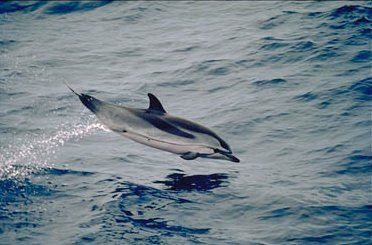
Source: Wikimedia Commons
Officials from the National Animal Health Service (SENASA in Spanish) in Costa Rica decided to put down a striped dolphin (Stenella coeruleoalba) that had persistently beached itself despite repeated efforts to return it to sea.
The marine mammal in question was initially found on the beach by surf fishermen in Playa Lagarto, province of Guanacaste. They returned the dolphin to sea, but other fishermen returning with their catch found the cetacean once again lying on the sand. Puzzled by the animal’s behavior, they contacted a local teacher, who in turn asked Fuerza Publica (the national police) officers to help.
Officers from the local Fuerza Publica detachment loaded the striped dolphin into a patrol car and brought him to authorities from SENASA and the Tempisque Conservation Area. Personnel from the Veterinarian School of the National University of Costa Rica also responded.
Suspected Bacterial Infection
According to a news report by national tabloid newspaper Diario Extra, the Chief Veterinarian Microbiologist at SENASA believes that the dolphin was suffering from an advanced case of brucellosis, an infectious disease that affects many mammals. When the Brucella ceti bacteria affects the central nervous system, it tends to provoke severe impairment of locomotion and coordination.
Microbiologist Gabriela Hernandez believes that brucellosis had so thoroughly affected the dolphin that it was no longer able to swim or protect itself. When Fuerza Publica delivered the dolphin to SENASA, animal health officials noticed that it had also suffered severe injuries consistent with scraping against coral reef and hitting the ocean bottom.
Hernandez lauded the rescue efforts by fishermen and local authorities, but she also warned that brucellosis is not strictly a zoonosis; it can also be transmitted to humans and cause a health condition known as Crimean or Mediterranean fever. She urged people in Costa Rica to wear gloves and exercise caution when coming across sick animals.
Striped dolphins are often affected by brucellosis; when they feel that they may not make it they tend to beach themselves. In 2012, 15 beached dolphins were spotted at Playa Lagarto. Reports of sporadic beached marine mammals are not uncommon in Costa Rica; however, marine biologists are concerned about massive beaching behavior in dolphins as has been observed in recent years in Peru. The Costa Rica Star has previously reported on this phenomenon.
A necropsy has been ordered on the dolphin; it will take a month to get the results.



