


 SIGN UP FOR OUR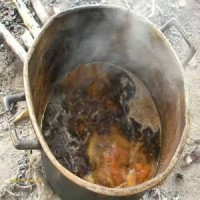
Ayahuasca
As more details are turning up in relation to the horrific attack that a homeless man suffered in Miami at the hands and teeth of an ethnic Haitian man turned cannibal who was shot to death by police, many people are pointing to drug-induced psychosis as the possible motive behind the gruesome and unprovoked assault.
Given the ethnicity of the attacker and the community where the events unfolded, speculations about the drugs that might have turned Rudy Eugene into a deranged and naked flesh-eating zombie: ayahuasca, burundanga, or a dangerous concoction of synthetic substances called “bath salts.” These substances are often labeled as being among the world’s most dangerous drugs, and at least two of them are known in Costa Rica, but can they actually cause someone to descend into a zombie-like state?
Ayahuasca
Ayahuasca is an infusion made from the extract of a powerful psychoactive vine loaded with alkaloids, and while it is typically associated with Amazonian indigenous culture, its physiological and psychedelic effects can be experienced in Costa Rica. Drinking an ayahuasca infusion can result in detachment from reality, which leads some people to believe that they could be turned into zombies upon ingesting it.
The myth: the shamanic ritual of drinking ayahuasca has expanded beyond the tribes of the Amazon as a result of globalism. Shamans in Costa Rica make ayahuasca available to those in search of physiological or spiritual healing, or even to psychonauts who wish to experience some sort of transformational enlightenment, what Zen Buddhists call satori. The zombie association to ayahuasca can be attributed to a 2011 article in the Canadian online magazine Common Ground, which described the “zombie kids” of Iquitos in Peru -a region known to attract psychedelic tourists:
“[zombie kids] are young tourists who have been psychologically bruised by quickie ceremonies with bad concoctions. These train wrecks are partly the unfortunate outcome of misunderstanding across cultures […]. Excessive demand from tourists is eliminating the plants that go into the ayahuasca brew from the Amazon basin. A peasant farmer with a hungry family to feed, who has hung out a shingle as a curandero, figures the white rich kids just want to obliterate their senses – so he finds the next best thing: scopolamine (burundanga).”
Another misconception with regard to zombies and ayahuasca comes from the popularization of the infusion by Wade Davis, researcher and author of The Serpent and the Rainbow, a best-selling book that was adapted into an American film in the late 1980s, and which dealt with Haitian Vodoun and zombies -but not with ayahuasca.
The truth: in Costa Rica, or anywhere else for that matter, ayahuasca should be approached with respect. Its benevolent shamanic uses do not intend to turn anyone into a zombie, but the strong psychotropic properties and high levels of alkaloids in the infusion call for its responsible use.
Burundanga
Mentioning burundanga -the devil’s breath- in the South American nation of Colombia strikes fear in the hearts of those who believe it is the world’s most dangerous drug. Burundanga is the colloquial name given to scopolamine, a substance that can be extracted from various plants of the Datura family, sometimes referred to in Costa Rica as “Reinas de la Noche” (Queens of the Night). Medicinal uses of scopolamine include transdermal patches given to cruise ship passengers for motion sickness, and treatment of bipolar disorder.
The myth: scopolamine and Datura plants are part of the “truth serum” family of substances often written about in fiction novels. The Colombian urban legends surrounding the substance more likely refer to opiates, sedatives and benzodiazepine drugs used by criminals to render victims unconscious and relieve them of their valuable possessions.
The truth: While Datura is mentioned in The Serpent and the Rainbow as the substance given to a Haitian man for two years to force him to work at a sugar plantation, the case of the burundanga business card has been debunked many times.
Bath Salts
American law enforcement analysts speculate that this ominous synthetic drug may have turned Rudy Eugene into a raging cannibal who growled at the Miami police officer who shot him. “Bath salts” is the street name given to a scary drug that has not been heard of before in Costa Rica. In the United States, National Public Radio has been looking at bath salts as the possible motive for the Miami cannibal’s macabre behavior.
There is no myth surrounding bath salts. The Drug Enforcement Administration in the U.S. classified it as a controlled substance last year after the methamphetamine-like mixture was found being sold as bath salts with names like Ivory Wave and Vanilla Sky. It reputedly amplifies all the side effects of a bad methamphetamine psychosis; it adds the stripping-of-clothes behavior as a result of increased body temperature, and it is also thought to bring about murderous delusions.
A former girlfriend of the Miami cannibal thinks that Eugene was involuntarily drugged and turned into a zombie with a Haitian Vodoun course. The woman is not of Haitian ethnicity, but the late Eugene was.



