


 SIGN UP FOR OUR
  A Kidnapper’s Favorite Currency: Bitcoin
On October 22nd, 2015, Hong Kong tycoon Wong Kwan (known as Wong Yuk-Kwan to his family) was released from captivity after his family reportedly paid the kidnappers $13 million in Bitcoin – a far cry from the $70 million the kidnappers had requested.
Kwan is the chairman of Pearl Oriental Oil, and had been in captivity for 38 days. He was in rough shape: blindfolded, cuffed to a bed by his ankles, and with a face almost unrecognizable due to the bruises and cigarette burns he had endured.
Upon being found by police he said, “I thought I was going to die.” The kidnappers had threatened to scrape out the eyeballs and chop off the legs of the 68- year old businessman.
But wait, didn’t we just go through a similar scenario here in Costa Rica? Yes, indeed, we did.
On January 20, 2015, Ryan Piercy, the former General Manager of the Association of Residents of Costa Rica (ARCR), was kidnapped and his family was asked for $500,000 in Bitcoin to pay for his release. He was held for 5 weeks, outside, chained by his neck to a tree. Clear details of his release have not been published.
It has been reported that his family ostensibly made partial payments via various Western Union transfers to Egypt, Ukraine, and Romania (more than likely, such wire transfers would have been made in United States dollars, not Bitcoin). But the demands and threats from the kidnappers to his family have continued, via emails and telephone threats. Anonymous donors are now offering $50,000 – in any currency – for information leading to the capture and arrest of Piercy’s kidnappers.
Wow. Hasn’t our little Costa Rica become sophisticated and worldly these days? What happened to the good old days of briefcases bulging with unmarked bills, dropped off at secret rendezvous locations?
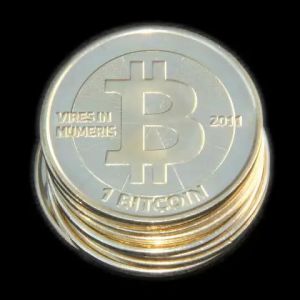
Well, times have changed. The new currency for ransom payment is Bitcoin, which has become the currency of choice for people conducting illicit activities (ransoms, drug deals, extortion, child porn, etc.)
Bitcoin is a type of digital currency used to regulate transfers of funds independent of a central bank. Unlike dollars or euros, Bitcoins aren’t printed, there are no transaction fees, no need to give one’s real name, and no middle men or banks. International transfers are easy and cheap because they are not tied to any country or subject to any regulation – and boy, are they hard to trace.
Bitcoin users’ transactions are private, which allows them to buy or sell without it being easily traced back to them. Bitcoins are stored in a “virtual wallet”, which exists in the cloud, or on the user’s computer.
Bitcoin was created in 2008 by an unknown person using the alias Satoshi Nakamoto. Bitcoin has quickly become the world’s favorite decentralized digital currency. In fact, on October 30th of this year, the price of Bitcoin hit a new high for 2015, with the CoinDeskBitcoin Price Index (BPI), peaking at a whopping $333.75, pushing it to its highest value this year.
Now, back to our kidnap victims. Wong Kwan is already back at work. Fifteen Taiwanese, including a village chief, have been arrested, but authorities think there might be many more suspects involved. They suspect the kidnapping was the work of the notorious United Bamboo Gang.
Here in Costa Rica, where kidnappings are quite uncommon, it has been reported that the police have no leads at all, hence the reward money offered for information. The kidnappers have used the Dark Web to communicate in both Spanish and English with Piercy’s family. Piercy is no longer working as General Manager of ARCR. People who have seen him recently say he is looking better, but will not discuss any details of the kidnapping or police investigation.
The Washington Post called Bitcoin, “the currency of choice for seedy online activities.” Previous methods of paying kidnappers were risky and awkward. They often required face-to-face meetings or easily traceable bank transfers, prepaid cards, or credit card payments. But with Bitcoin, no personal information is collected from users and Bitcoin transactions are irrevocable so victims cannot reclaim their money as they would with PayPal or credit cards. It’s seamless – and nearly untraceable.
In a country of just under 5 million people, Piercy’s abduction is one of the strangest crimes in recent history. We can only hope for stellar police work, followed by justice being served, followed by an end to the angst and torment of Piercy’s poor family.
We are truly no longer in Kansas City, Toto.
About the Author
Carol Blair Vaughn holds a Master’s Degree in Performing Arts and is a retired college professor from Washington, D.C. She inherited her love for Latin America from her father, the former U.S. Ambassador
to Colombia, Panama, and Director of the Peace Corps, Jack Vaughn. Carol writes for the Association of Residents of Costa Rica (ARCR) and for an English language club in the southern region of Costa Rica. In the past, Carol served as Editor in Chief of What’s on Tap magazine.



