


 SIGN UP FOR OUR
According to the company’s latest sustainability report, Bridgestone reduced its carbon dioxide emissions in its operations in the region by 15 percent last year.
The company aims to become carbon neutral, and is making strides towards the goal.
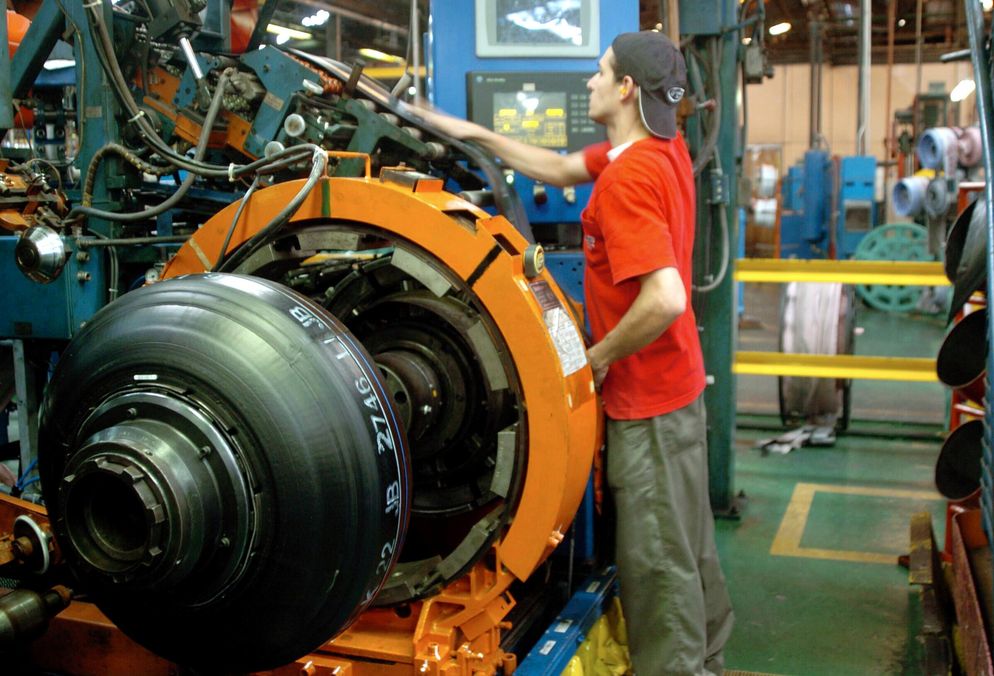
In Costa Rica, the company’s 1,042 employees produce 10,395 tires per day at the Bridgesteon plant in Belén, west of San José.
The company’s second sustainability report includes indicators and results for its operations in Mexico, Costa Rica and Colombia.
In 2016, the Costa Rica Bridgestone plant used 1,360 cubic meters (m³) of recycled water for watering its gardens.
Also as part of its environmental commitment, the company implemented a sludge composting at its wastewater treatment plant, and returned 272,073.4 m³ of treated water to the Quebrada Seca.
Other measures taken to reduce Bridgestone’s carbon footprint was recycling and reusing over 80 percent of its waste.
Alfonso Zendejas, president and CEO of Bridgestone for Northern Latin America, explained that Bridgestone is a company that strives for superior quality, not only in its products and processes, but also in its corporate activities and internal policies regarding responding to its stakeholders views.
“In this way, the development of the sustainability report responds to our commitment to establish a sustainable business model,” said Zendejas.
Bridgestone Corporation (株式会社ブリヂストン Kabushiki-gaisha Burijisuton) (TYO: 5108) is a multinational auto and truck parts manufacturer founded in 1931 by Shojiro Ishibashi (石橋正二郎 Ishibashi Shōjirō) in the city of Kurume, Fukuoka, Japan. The name Bridgestone comes from a calque translation and transposition of ishibashi, meaning “stone bridge” in Japanese.
As of 2015, the company is the largest manufacturer of tires in the world, slightly ahead of Michelin. the Bridgestone Group had 141 production facilities in 24 countries as of 2005.



