


 SIGN UP FOR OUR

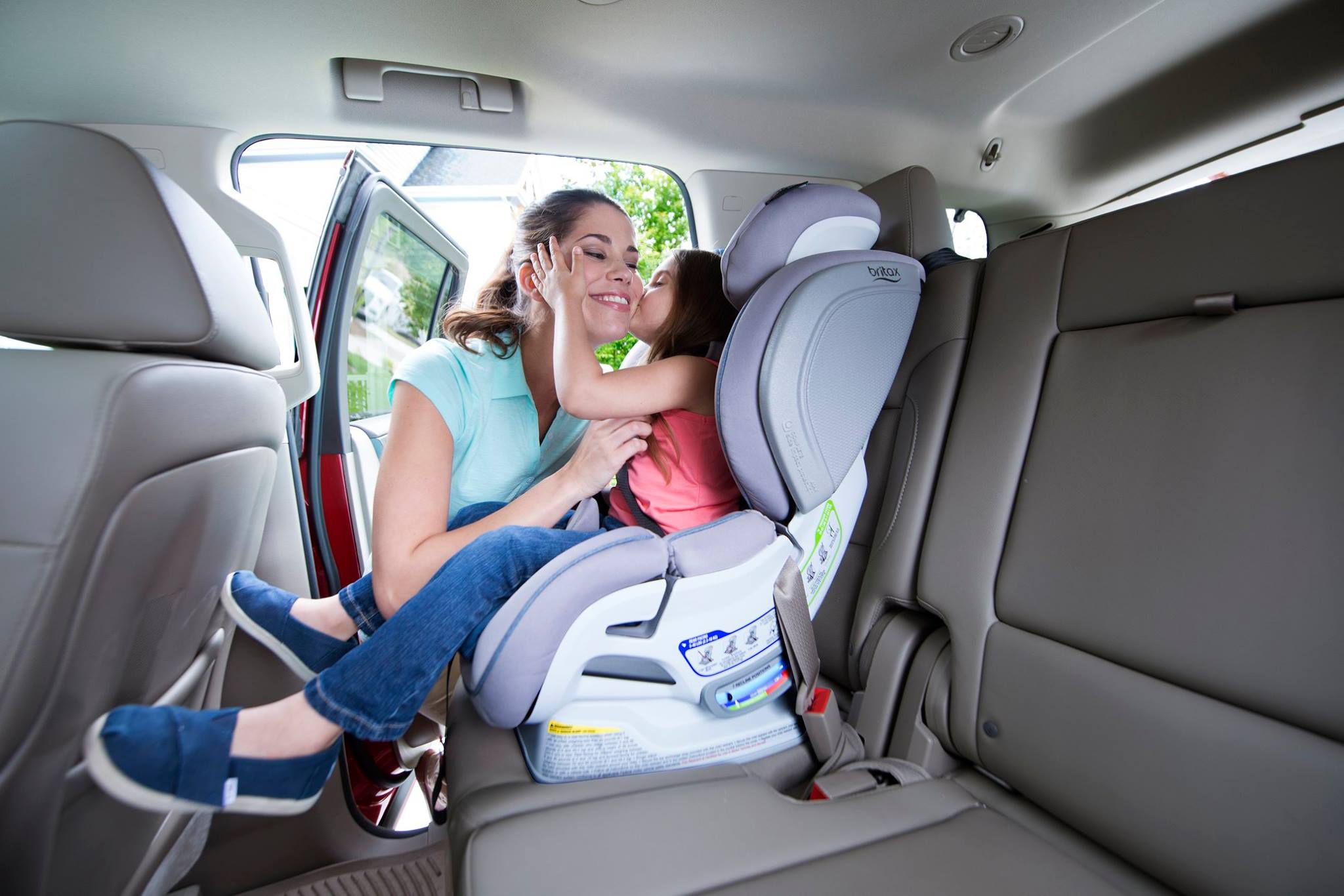
Amidst increasing traffic accidents and road-related fatalities, Costa Rican police are calling on drivers to always, and correctly, use safety seats for children.
A safety device is required for all children in a private vehicle under the age of twelve in Costa Rica, said the Ministry of Public Works and Transportation (MOPT, in Spanish), who said in January this year 69 drivers were fined for not using a car seat or booster for a child passenger.
The fine for not safely bucking in a child is ¢207,359.54 (about US$375), negligibly lower than last year’s fine, and will get you 4 points on your license, said MOPT officials.
The law stipulating regulations on transporting a child in private vehicles has been in effect since October 2012, and establishes which devices are appropriate according to the age, weight and height of the child.
“It’s a shame that adults endanger the lives of their children, their nephews, their grandchildren. It calls into question their ability to protect these children, because it shows they are not sufficiently responsible,” said Commissioner Mario Calderón, Director of the Traffic Police.
Calderón continued by saying he does not accept justifications made by adults who argue they simply forgot to put the car seat in, or say they can’t afford to purchase a safety device as this would mean they give very little value to the life of the child they are charged with protecting.
Children under one year of age in Costa Rica, as elsewhere in the world, must be placed in the back seat of a vehicle, ideally in the center, in a car seat that faces backwards, as the physical development of an infant’s neck and back muscles would not allow them to withstand a crash if they were placed in a forward-facing position, said Calderón.
Holding a child in one’s arms, no matter how tightly, is completely ineffective for preventing injury to a baby, despite prevailing myths that this is safe, said Calderón. In the event of an accident, the baby will simply fly out of one’s arms, no matter how strong the adult, and shoot through a windshield like a bullet, he said.
Calderón also emphasized the importance of carefully reading the device manual to ensure the car seat or booster seat is correctly installed, just as one read’s a cell phone or television manual before turning it on. An incorrectly installed seat can be just as dangerous as not using one, said Calderón.
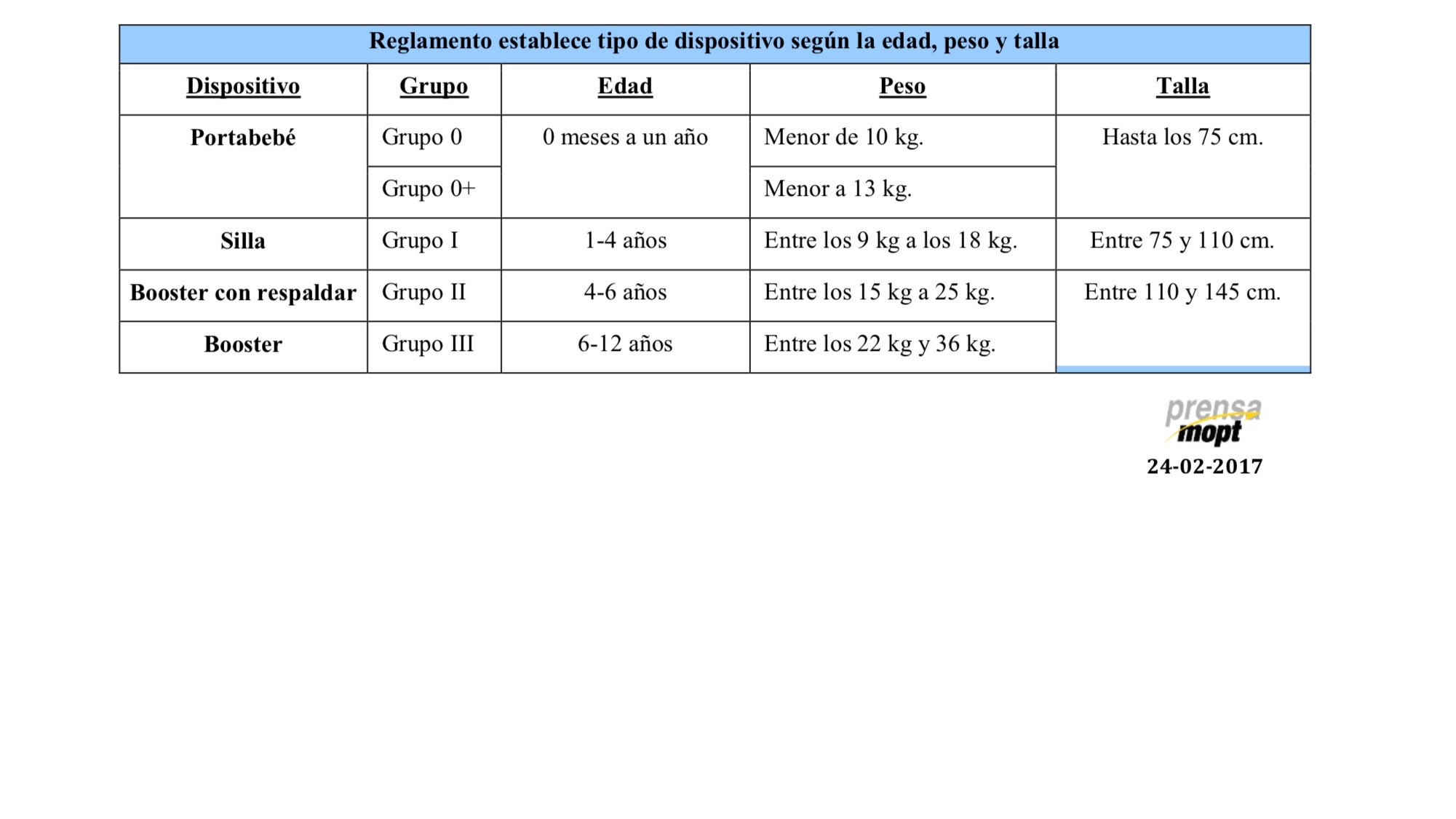
Children between one and four years of age, must travel in a car-seat designed for the purpose of car travel, and be fastened in the back seat, also preferably in the center, according to MOPT regulations.
From ages four to six years, children should be seated in a booster with backrest, and also ride in the back seat of the vehicle. Children aged between six and 12 years must travel with a booster, but the back rest is optional.
All devices must be suitable for the specific height and weight of the child being transported. Each car seat and booster specifically states the minimum and maximum height and weight safety requirements. This ensures for example, that a child’s head does not go above the top of the device.
Some older children can exempt out of these guidelines based on their height, said Calderón. A child over 1.1 ms for example, even if he is 5, can use a booster without a backrest. And a child who is 11 years old, but is at least 1.5 ms tall, and the soles of his or her feet lay flat on the vehicle floor when seated no longer needs to use a safety device.
The MOPT also reminds motorcyclists that no children under the age of five are allowed as additional passengers on a motorcycle, as well as noting that all motorcycle passengers must wear an appropriate helmet.
Safety requirements are summarized in the attached chart provided by the MOPT.



