


 SIGN UP FOR OUR
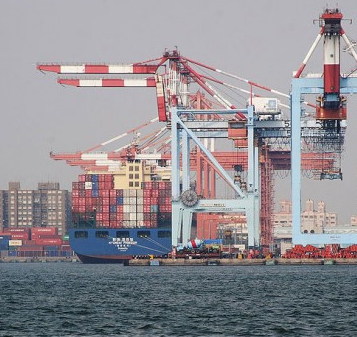
During a recent visit to Beijing, China by Costa Rica’s foreign trade authorities, considerations for the creation of a Chinese funded and developed Special Economic Zone in Costa Rica were discussed.
China presented results of a technical study undertaken to determine the feasibility of developing such a commercial zone.
Moving forward on such a large scale and long-term initiative requires certain basic conditions to be met, said Chinese authorities in the report.
These range from the enactment of legislation to protect incentives granted to enterprises in free trade zones, to the construction and constant strengthening of adequate infrastructure for the mobilization of data, cargo and people.
The technical report pointed out the need for simplified rules, regulations and procedures for doing business in Costa Rica; and the provision of competitive provisions to regulate labor relations between employees and employers operating in those areas, according to Foreign Trade Minster Alexander Mora who presented a synopsis of the report conclusions.
In light of the complexity of the long term nature of many prerequisites for such a zone, Chinese authorities recommend Costa Rica start by prioritizing the completion of projects planned for the Central Pacific and area in and around the airport and Pacific port. These include moving forward on the new international airport, the expansion of Route 27, the construction of the San José-San Ramón highway and its connection to the Central Pacific, the expansion and modernization of the Port of Caldera, and the expansion to four lanes of the Interamerican North from Barranca to Caldera, as well as initiatives to consolidate new infrastructures, and university services and technical training in that region.
Mora also met with his Chinese counterparts to review progress in implementing the China-Costa Rica bilateral free trade agreement. Topics included how to speed up approval and implementation of several phytosanitary and animal health protocols so that Costa Rica can export frozen pork, frozen and dehydrated pineapple, and other products to the Asian market.
Additionally, Mora met with Chinese import companies considering investing in Costa Rica as well as with Chinese buyers interested in Costa Rican products.
There was talk of the possibility of larger Chinese companies using Costa Rica as a headquarters to establish their operations throughout the Americas.
And finally, China committed to the creation of a China-Costa Rica business studies center under the auspices of they international business university.



