


 SIGN UP FOR OUR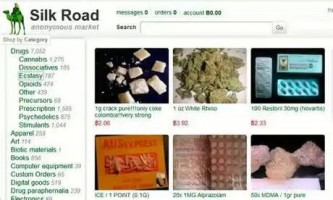
Silk Road screenshot before seizure.
Ross Ulbricht is a young man from Texas who spent part of his childhood in Costa Rica. Earlier this year, Mr. Ulbricht was found guilty of operating Silk Road, an online bazaar that connected drug dealers with consumers via a Bitcoin escrow system and home deliveries; he is now waiting to be sentenced, and prosecutors from the United States would like to see Mr. Ulbricht spend the rest of his life in prison.
As previously reported by The Costa Rica Star, Mr. Ulbricht’s parents established part-time residence in our country many years ago. According to a short bio on the eco-travel website Earth Foot, Kirk and Lyn Ulbricht:
[Have] been married for 24 years and have raised two great kids, Calla and Ross, and we’ve been in several businesses. Eleven years ago, while visiting friends on the Osa Peninsula, Kirk found his heaven and Lyn began overcoming her snake phobia. We bought four acres of overgrown cow pasture by the Golfo Dulce, cleared it of brambles and weeds, and began to transform it. Kirk planted 1,000 trees (now part of the monkey trail!) and built Casa Bambu with the help of local friends. He just completed a second bamboo house, Casa Linda, in September, 2002. Both houses are solar- powered with artesian wells, beautiful tropical yards and on a pristine beach.
Back in the U.S. Kirk is a “green” builder and home designer in Austin, TX. His builds his houses to be ultra efficient – utilizing passive solar techniques, proper siting and other applications that conserve energy while providing comfortable shelter. His heart, however, is in Costa Rica, where he relishes life in the rainforest and can fulfill his lifelong love of the sea. Here he, Lyn and their two children, love to gather with friends and family, when life permits.
In Costa Rica, the young Mr. Ulbricht learned to surf. He also practiced yoga and was mesmerized by the primate relationships between humans and monkeys in the forests of the Osa Peninsula. It was an idyllic time for Mr. Ulbricht, who enjoyed smoking marijuana on the beach and discussing topics related to Libertarian politics and Eastern philosophy. He would later return to Texas to finish his studies in materials engineering; he did not start his Silk Road project until after his graduation.
U.S. law enforcement investigated Silk Road and Mr. Ulbricht by infiltrating the site, which was operated as a hidden service on the Tor privacy network, which means that it was not directly accessible from the World Wide Web. Once inside, agents from the Drug Enforcement Agency posed as drug dealers, buyers and even members of a biker gang who engaged Mr. Ulbricht into ordering the assassinations of problematic Silk Road members.
It is important to note that U.S. prosecutors have made certain instant messaging records between the infiltrated DEA agents and Mr. Ulbricht public. As published by the esteemed technology website Ars Technica, which has covered the Silk Road trial in great detail and with quality reporting, the chat records are very troublesome insofar as painting an image of Mr. Ulbricht as someone who would not think twice about paying off a hitman to carry out a murder contract. However, it is also important to note that the infiltrated DEA agents made these services available to Mr. Ulbricht and even made up evidence of a purportedly successful contract.
Mr. Ulbricht was not charged with the murder-for-hire schemes, which would be problematic to prove in court given the convoluted manner in which they were tantalized by the DEA. As it stands, the Silk Road trial has resulted in some ugly details about how some U.S. government agents operated. According to court records, DEA agents went beyond the scope of the warrants to hack their way into Silk Road before dangling hitman contracts in front of Mr. Ulbricht. The escrow accounts of Silk Road were confiscated by the U.S. government, which later auctioned the Bitcoins for millions of dollars, but not before a couple of agents from the Secret Service and DEA reportedly helped themselves to hundreds of thousands dollars.
According to a story published by Ars Technica in late March:
Two federal agents whose work helped to shut down the Silk Road online drug marketplace have been accused of stealing from the Darknet market during the investigation. The criminal complaint (PDF), unveiled today, reveals a remarkable level of corruption within the investigation into the drug marketplace, which hosted more than $200 million in transactions.
DEA agent Carl Mark Force IV (that’s his real name) was a lead agent in the investigation that brought down Mr. Ulbricht and Silk Road. He was arrested by federal agents for allegedly stealing Bitcoins from the Silk Road accounts; other charges include extortion and blackmail. Mr. Force was one of the agents who offered hitman contracts to Mr. Ulbricht. Secret Service agent Shaun Bridges allegedly stole username and password credentials to access Silk Road’s accounts and began siphoning funds.
The alleged actions of Mr. Force and Mr. Bridges, who are currently awaiting trial, seem to be even more egregious than those of Mr. Ulbricht, whom they investigated and brought down. In fact, when Mr. Force was arrested, he was in possession of a bag containing his passport, a 9mm pistol, ammunition, and $5,000 in blank money orders.
Notwithstanding the brazen crimes allegedly perpetrated by the two rogue agents, U.S. prosecutors have tried everything to deny Mr. Ulbricht the opportunity to one day return to Costa Rica in his old age. In recent weeks, the prosecution has even presented evidence mentioning at least three Silk road former users who died from complications related to drug use, not necessarily overdoses. The defense has argued against such evidence, comparing it to blaming liquor stores around the world for the millions of alcohol-related deaths each year. Still, it seems that prosecutors would prefer to see Mr. Ulbricht die in prison than to see him receive a lower sentence.



