


 SIGN UP FOR OUR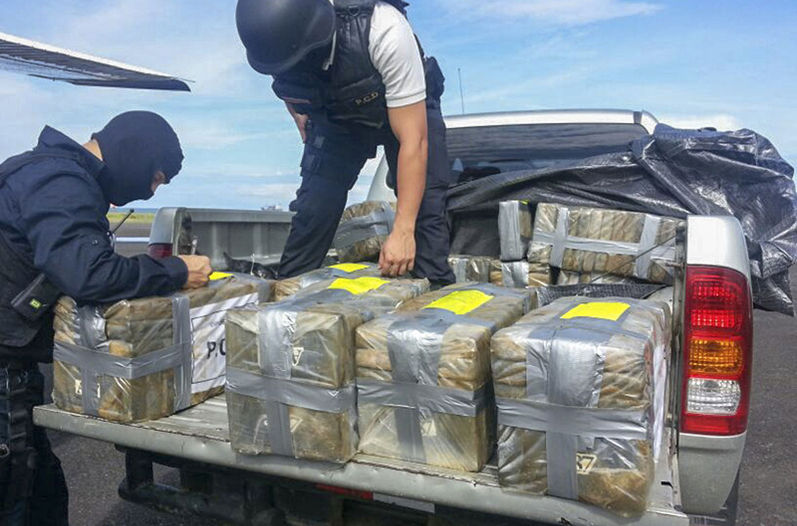
Some 1,700 tons of cocaine is expected to pass through Costa Rican territory in 2016. (Photo courtesy of the Ministry of Public Security)
Costa Rica’s Ministry of Public Security (MSP) and Drug Control Police (PCD) are expecting a record level of cocaine trafficking through the country and its territorial waters this year, due in large part to increases in production in the source countries of Colombia, Peru, and Bolivia.
The MSP estimates that some 1,700 tons of cocaine will flow through Costa Rica and its territorial waters this year, a nearly 42 percent increase from the 1,200 tons estimated to have been trafficked through Costa Rican territory in 2015 and 2.5 times as much as the 670 tons believed to have been trafficked through the country in 2014.
Last year, Cost Rican authorities were able to seize just 15 tons – less than 1 percent – of the estimated 1,200 tons believed to have flown through the country’s territory.
According to the PCD, the amount of land dedicated to coca production – the plant from which cocaine is derived – in producer countries has increased, as well as the quantity and quality of the harvest.
Almost 90 percent of cocaine is destined for the United States and Europe, placing Costa Rica directly between producer countries in South America and narco-traffickers’ largest target market, the U.S., to the north.
According to Costa Rican authorities, 85 percent of cocaine passing through the country’s territory is transported by sea, and cocaine trafficking is almost completely controlled by Mexican drug cartels.
Costa Rica is also used by the cartels as a storage and warehousing location for the drug, according to officials.
Just Wednesday, Costa Rica’s Coast Guard were able to seize 875 kilos of cocaine after intercepting a speedboat some 75 miles off the coast of Quepos, in Costa Rica’s central Pacific.



