


 SIGN UP FOR OUR
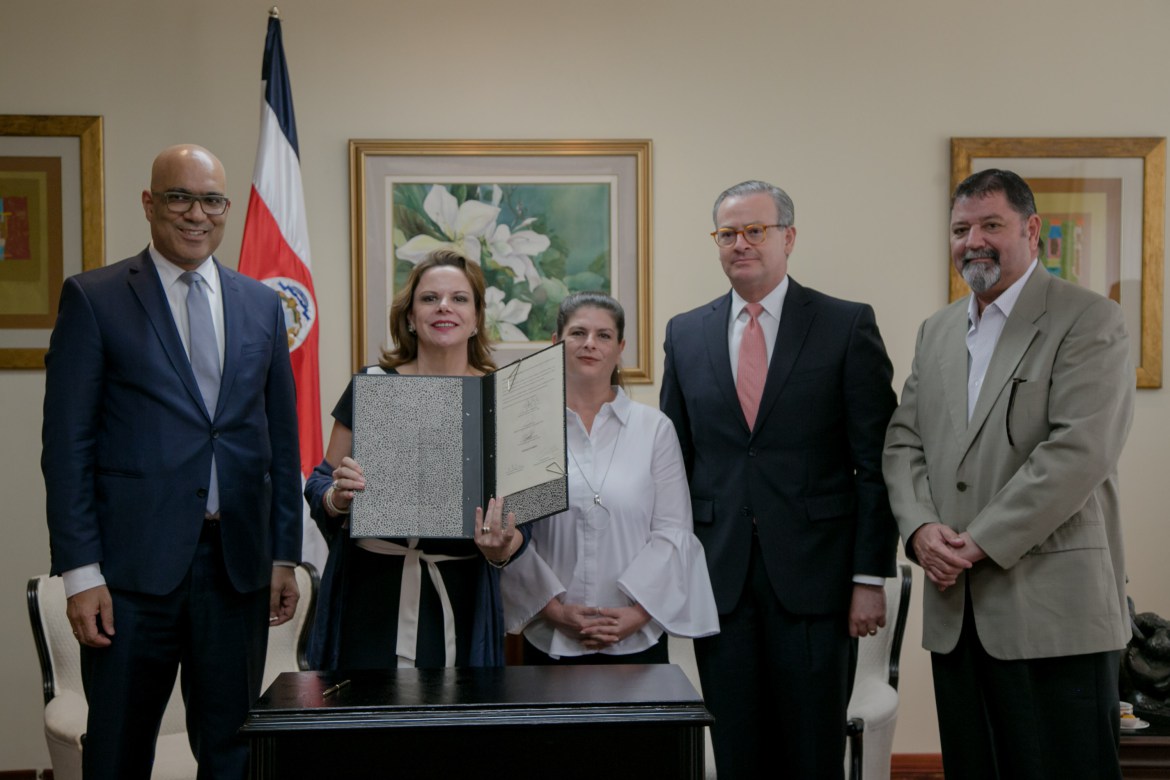
The program Shelter City Costa Rica offers a Comprehensive Protection Center in the country for the temporary relocation of human right advocates of the Central American region whose lives are at risk.
The initiative hopes to give and option for those human right advocates of El Salvador, Guatemala, Honduras and Nicaragua who expose themselves in their day to day activities and have received threats by power groups.
The agreement was signed by Costa Rica and Acceso Foundation (a human rights foundation with 25 years of work in Central America), and became a reality thanks to the commitment of the Costa Rican Vice-Presidency, the Foreign Affairs Ministry, the General Directorate of Migration among others.
Vice-President of Costa Rica Ana Helena Chacón commented, ¨Costa Rica reaffirms its commitment to the protection of human rights, this program is valuable as it promotes migratory actions, offers security and protection to those who endanger their lives to defend and fight for Human Rights¨.
This program was born in the Netherlands and has extended to other regions of the world like Africa and Georgia.
Those that arrive to the country as part of this program will stay for a period of three months, although it could be less than three months or could extend to a maximum of six months depending on each case.
During their stay, those who are part of Shelter City will receive the help of an interdisciplinary team and will be able to exchange experiences and knowledge with other people and human right organizations in the country, collaborate in the community and institutions and receive comprehensive assistance to strengthen their capacity for resilience to be able to face difficult situations such as criminalization, threats to their physical and emotional integrity, stigmatization, and other attacks they can be victims of for simply defending human rights.
¨This program responds to the global context and particularly the Central American context. According to the most recent report by Front Line Defenders 2017, 312 murders of advocates were registered in the world, 85% of them in Latin America. Currently, civil rights are being restricted, extraordinary powers have been transferred to military bodies in the countries and as it is has been exposed by the Inter-American Court of Human Rights, there is the inadequate use of criminal law by the government and non-governmental entities with the objective of criminalizing the work of human right advocates¨, explained Tanya E. Lockwood, Executive Director of Acceso Foundation.



