


 SIGN UP FOR OUR


For all of you readers who are tired of news saying to quit eating red meat, this story’s for you.
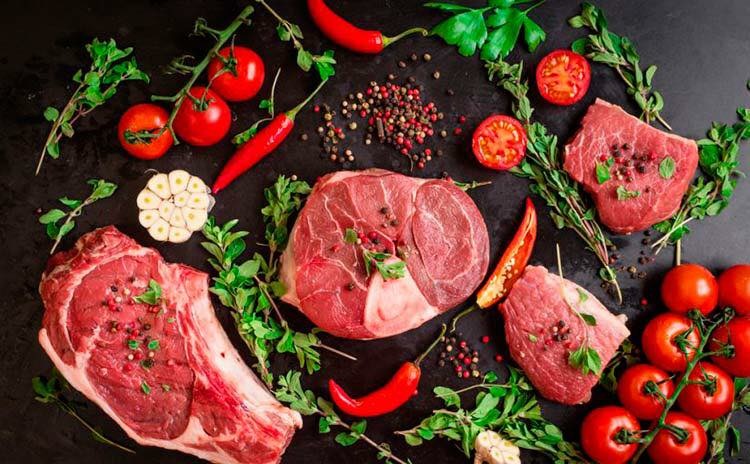
A recent study by researchers at the Center for Animal Nutrition Research (CINA) at the University of Costa Rica confirmed that beef produced in Costa Rica contains a significant amount of linoleic acid conjugate (LAC) or rumenic acid, a substance that can boost immunity, protect against cancer and against heart disease.
Cool, or what?
Rumeric acid, cis-9-trans-11 LAC, is a fatty acid that is generated naturally and efficiently in the rumen of cattle and other animals such as sheep and goats. This occurs thanks to the action of the bacteria present in the rumen, which, in transforming the polyunsaturated fatty acids ingested in the diet into saturated fatty acids, also generate intermediates such as conjugated linoleic acid.
Sound complicated? Well, no need to think too much – your digestive system has it all figured out.
Several studies at the international level have shown that this molecule has an important potential as an anticancer in humans and as an anti-atherosclerotic, i.e, it prevents the deposition of fat in the arteries. This component is present in both cow meat and milk, and, industrial processing and cooking do not alter LAC levels.
“Three years ago researchers found that ruminant milk in Costa Rica had significant LAC levels, so we were left with no doubt that the same would be true with their meat. If it is a product that is generated in ruminants, then the meat would also have a contribution, so we decided to do a project to try to confirm our hunch,” explained CINA researcher, Carlos Campos Granados.
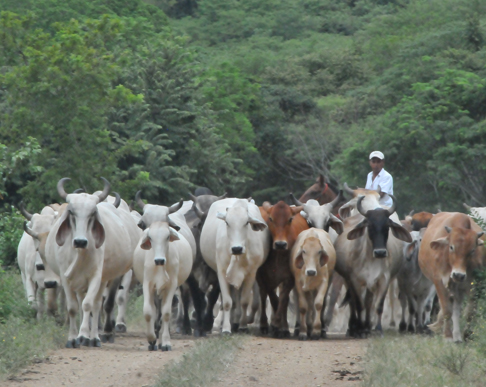
In this project, a profiling of all the fatty acids contained in bovine meat was carried out in the main livestock areas of the country; the northern zones of San Carlos, Guanacaste, and Guápiles, and the south zone of Pérez Zeledón. In addition, researchers Augusto Rojas Bourillón and Campos Granados collected information on the diets that cattle farmers give the animals, a factor that may be key to explaining higher or lower concentrations of LAC in the meat.
The concentrations of LAC found in the diagnosis show that meats from Costa Rica can add from between 1.25 mg to 103 mg per day of this important fatty acid for humans. The results suggest that the consumption of beef can supply from 2 to 100 percent of the daily recommendation of LAC consumption.
Campos Granados explained that meat contains between 16.5 and 49.8 percent fat, and this varies according to the animal’s breed and diet. He also said it should be noted that ruminant fat also contains a greater proportion of saturated fatty acids, which are not so healthy, than the meat’s unsaturated fatty acids such as LAC.
The researchers also found that the concentrations of LAC in beef from Guanacaste and other northern regions are within the average reported in studies from other countries, while meat from the southern zone, which also presented lower total fat content, has a far greater than average LAC content. Researchers think this may demonstrate a direct relationship between the fat content and LAC levels.
According to official data, the per capita consumption of beef in Costa Rica averaged 13.67 kg in 2016.
In the next stage of the study, researchers will study the relationship between animals’ diets and the concentration of conjugated linoleic acid in meat. They work with the Technological Institute of Costa Rica (TEC) in San Carlos to include in a sample of cattle a diet high in linoleic acid to stimulate the synthesis of ALC in rumen in order to see the outcome.
Campos Granados, who has worked on the development of dietary strategies for ruminants, explained that one of the hypotheses is that “if we give the animals unsaturated linoleic acid in greater proportion in the diet, the bacteria will leave more intermediates and that is going to deposit in the fat.” Fodder provides more unsaturated fatty acids than grains.
With the data obtained in this study, it is estimated that the meat produced in the country will able to offer Costa Rican consumers a healthier beef.



