


 SIGN UP FOR OUR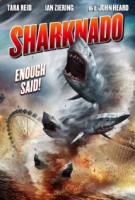
Source: Wikimedia Commons
Sharknado, a 2013 made-for-television movie that recently saw its debut on the SyFy channel, has managed to become an instant cult film; a feat that was only matched by 2006’s Snakes on a Plane, starring Samuel L. Jackson. The two films share something in common: Blunt titles that sum up their ridiculous plots. Sharknado goes a step further with is movie poster, which showcases the tag line “Enough Said!”
Sharknado is a portmanteau of shark and tornado, and that is what happens in the film: Deadly sharks rain down from the sky onto the City of Los Angeles. This premise, which is ludicrous even for a B-movie, fired up a social media storm -no pun intended, particularly on the short-messaging network Twitter. And as incongruous as a sharknado may seem, there is an interest in pondering about the scientific plausibility of such a fantastic meteorological event. First up is Mother Jones, which cites an Associated Press report from the late 1960s about a tornado sucking up marine animals from Ocean World in Florida. Next, we have Gothamist providing snark commentary on the New York Post “Trying Hard To Prove That Sharknado Could Happen In NYC.”
So now it is the turn of The Costa Rica Star to engage in pseudoscience discussion about the remote probability of a sharknado in Costa Rica. Here we defer to Wikipedia, the top Internet site for constructive discourse of such events is effectively crowdsourced:
“One hypothesis offered [for raining animals] to explain this phenomenon is that strong winds traveling over water sometimes pick up creatures such as fish or frogs, and carry them for up to several miles.
Waterspouts are capable of capturing objects and animals and lifting them into the air. Under this theory, waterspouts or tornadoes transport animals to relatively high altitudes, carrying them over large distances.”
Then we have a 2011 news report by Australian online news site The Daily Examiner about sharks spotted on city streets:
Bull sharks seen in flooded streets
“TWO bull sharks have been spotted swimming past the McDonald’s restaurant in Goodna.
Goodna butcher Steve Bateman saw one of the sharks swimming through the flooded waters of Williams Street near his bucher’s shop in the St Ives shopping centre yesterday.
There were several reports of another shark spotted in Queen Street, the main street through Goodna.”
A bull shark, Carcharhinus leucas, graces our pretty 2,000 colones bill (about $4), which features other species emblematic of Costa Rica’s rich marine ecosystem such as sea turtles and starfish. This shark species typically swims in the brackish water of estuaries and the fresh water of lakes and rivers; it can be found happily swimming in the Caribbean, into the San Juan River and up to Lake Nicaragua. The Pretoma non-profit organization, which is engaged in the conservation of sharks and sea turtles in Costa Rica, has spotted and tagged large bull sharks over four meters (about 12 ft) in length in our southern Pacific coast. Fishermen in St. Petersburg Beach in Florida recently caught a 700-pound bull shark.
Now back to the sharknado in Costa Rica: In the odd chance that a tornado or waterspout sucks up a portion of the Corcovado, Tortuguero or San Juan rivers and just so happens to absorb some bull sharks along, they are unlikely to survive the force of such meteorological event. In the movie Sharknado, the airborne selachian predators are very much alive and attack the denizens of Los Angeles; in real life, they would have hit the San Fernando valley already dead.
The SyFy cable network is pleased with the ratings and response to Sharknado and the handful of B-movies about killer sharks that preceded its debut; this means that if you missed it, you will be able to catch it soon.



