


 SIGN UP FOR OUR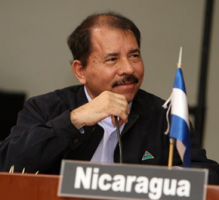
President of Nicaragua Daniel Ortega
The recent headline in Bloomberg does not paint a rosy picture for the impoverished Central American nation:
Nicaragua’s Revolution Heads Toward Dictatorship
James Gibney, member of the Bloomberg’s editorial team, wasted no time in establishing the unfortunate irony:
Nicaragua’s National Assembly just approved changes to the constitution allowing President Daniel Ortega to run for a third successive term in 2016. Somewhere, Ortega’s former arch-enemy, the Nicaraguan dictator Anastasio Somoza DeBayle, is having a good laugh.
The political shakeup goes beyond the matter of Ortega’s potential dictatorship. The Washington Post reveals more:
The constitutional change also gave the president the power to issue decrees without congressional approval. It also allows serving military and police officers to hold what had been civilian posts in government agencies.
The change approved Wednesday allows the army to help draft laws governing the country’s national records, computer databases and telecommunications spectrum.
The idea of Nicaragua’s armed forces exerting control over the national archives, civil registry and telecommunications is definitely ominous, particularly when considering events such as the dreadful Google Maps invasion of 2010 by an infantry squad led by an aging guerrilla fighter who was once given protection by Costa Rica.
Suddenly, Nicaragua does not seem so inviting for expats in Costa Rica, who are not only worried about the rising cost of living but also the growing “Americanization” of the country, the rampant corruption at all levels of government and society, the proliferation of Wal-Mart, Starbucks and Hooters, the eternally-bad roads, etc.
Such issues effecting expats in Costa Rica are minimal in comparison to a potential dictatorship where the army has total control of records and communications. On the other hand, however, there’s always Panama to consider.



