


 SIGN UP FOR OUR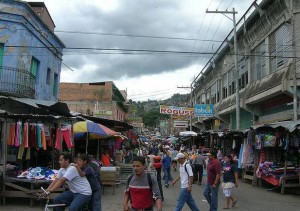
Street scene in Tegucigalpa
Costa Rica has the highest cost of living in Central America, a fact that is commonly reflected in the exorbitant fuel prices and the high cost of funeral services and cemetery plots.
A gallon of Super Gasoline -93 octane- is almost $6.00, something which prompted the Regulatory Agency of Public Utilities and Services (ARESEP in Spanish) to recently approve a nationwide increase in bus fares by approximately 11 percent, a hike that bus line operators think is meager when considering that the prices of gasoline and diesel are certain to go up in the near future. Drivers in Costa Rica feel assailed at the pump, and many wonder if there is any benefit to having a public agency like the ARESEP. An increase in taxicab rates is also expected next week.
Meanwhile, fuel prices in Honduras registered their third drop of the year. As of April 30th, a gallon of 91 octane at gas stations in Tegucigalpa was going for approximately $4.76.
Funeral services in Costa Rica cost around $2,000 -not including the burial plot. When it comes to finding a final resting place for their loved ones, Ticos are increasingly opting for cremations to offset the cost of burials. Costa Rica is a Roman Catholic country by virtue of her Constitution; for this reason burials are preferred, but often cannot be afforded.
In Tegucigalpa, funerals are free thanks to an electoral campaign promise made by Mayor Ricardo Alvarez. Seven years ago, the Mayor promised free funeral services and burials in cemetery plots to his constituency. According to a recent report on BBC Radio 4, Mayor Alvarez has kept his promise, which he made based on a dire observation: the people in his populous city were being buried in black plastic garbage bags.
La Funeraria del Pueblo (the People’s Funeral Service) in Tegucigalpa offers more than just a simple free burial. A coffin with a stand, candles and even coffee and bread are provided free of charge to mourners. A pick-up truck serves as the hearse, the memorial Mass is coordinated with the local church, and a burial plot at the cemetery is assigned.
Life may be expensive in Costa Rica, but in Honduras it is seemingly cheap
The high cost of living in Costa Rica is just one of the factors inspiring some members of the expat community to consider moving to our neighboring countries to the north and south. As explained in detail in a previous article in The Costa Rica Star, the murder rate in Nicaragua might be increasing slightly –but it’s still lower than her neighbor to the south. The murder rate in Panama is higher than in Costa Rica, but that can be expected in a country with a population of just 3.5 million.
Slogans such as “the new Costa Rica” and “like Costa Rica 20 years ago” are being used to describe Nicaragua and Panama as the ultimate tourist and retirement destinations for jaded expats.
If Nicaragua and Panama seem enticing to expats who are concerned about crime, overpopulation and high cost of living in Costa Rica, would they be equally attracted to the low fuel prices and free funerals of Honduras?
According to statistics presented by the BBC, Honduras has the highest murder rate in the world. In 2011, the rate stood at 86 per 100,000 people. In ultra-violent Mexico, where shootouts between rival drug cartels have become almost quotidian, the murder rate is 18 per 100,000. Political assassinations can be expected in a nation that endured a violent coup d’etat in 2009, but the majority of the killings are related to gang feuds and criminal activity tied to Mexican cartels.
In the midst of this violence, Honduras is succeeding in improving her image and attracting more tourists in order to add her name to the list of nations that present alternatives to Costa Rica. According to a recent market research report by Companies and Markets:
“[…] in terms of arrivals and expenditure, by 2011 Honduras had surpassed its pre-crisis levels of 2008. The country is expected to maintain a positive growth in the travel and tourism during the forecast period.”



