


 SIGN UP FOR OUR


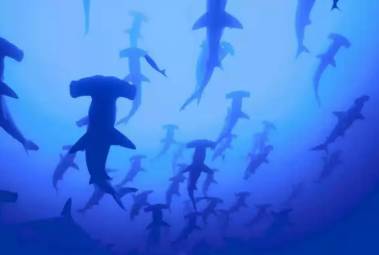
Despite a ban on the export of fins from the endangered hammerhead shark in effect in Costa Rican since March 2015, a large shipment has been readied for export to Asia, said Randall Arauz, spokesperson for the international marine conservation organization, Fins Attached.
Smalley Development S.A. has been working to fill an order for 690 kilos of hammerhead shark fins, the international trade of which has been banned in Costa Rica as a signatory to the international convention on the trade of endangered species (CITES), continued Arauz.
The company requested an export permit on August 5 from the National System of Conservation Areas (SINAC), Costa Rica’s CITES administrative authority. The request was then forwarded for consideration by the CITES Board of Scientific Authority Representatives (CRACCITES) for approval.
Arauz said the export request makes a mockery of Costa Rica’s commitment to the international CITES treaty, and threatens the country’s international image.
In the meantime, conservationists obtained information indicating the company had worked to stockpile the fins from May to September of 2015, when the ban was in place.
“We are calling on CRACCITES to reject this request, in light of the best available science and existing national legislation,” said Regi Domingo of the local conservation group, the Nakawe Project. “If Costa Rica wants to improve its conservation strategies, the country should adopt measures that reduce hammerhead shark mortality, such as spatial/temporal closures along migratory routes and in reproductive zones, and strict implementation of minimum size limits, among other strategies,” recommended Domingo, as measures to protect sharks that go beyond the fin ban export.
Costa Rica’s Wildlife Conservation Law requires these exports to be approved by the national scientific authority, a decision that must be based on evidence that the extraction animals from their natural state to supply international demand will not be to the detriment of the species’ population.
“There is no scientific evidence whatsoever showing that hammerhead shark populations have recovered so as to justify the renewed international trade of these animals,” said Andy Bystrom scientist at the Center for the Rescue of Endangered Marine Animals – CREMA. “On the contrary, out of the five distinct global hammerhead populations, the Eastern Tropical Pacific population (found in our region) is the most threatened as a direct impact of the shark fin trade and lack of governmental controls in the region.”
“How could it be sustainable, much less moral, to export shipments of endangered hammerhead shark fins during a time period when they were banned?” said Arauz. “The measure was designed to precisely discourage the extraction of hammerhead sharks to allow for population recovery.”
Fins Attached (www.finsattached.org) conducts research, promotes conservation and provides education for the protection of marine ecosystems. Fins Attached believes in the preservation of the world’s precious resources and that by protecting the ocean’s apex predators, marine ecosystem balance can be maintained for the benefit of all living things on earth. Fins Attached is a U.S. 501(c)(3) non-profit organization.
The Center for the Rescue of Endangered Marine Animals CREMA (www.cremacr.org) is a Costa Rican based marine conservation and research organization working to protect ocean resources and promote sustainable fisheries policies.



