


 SIGN UP FOR OUR
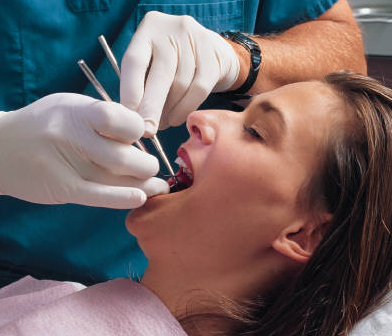 Although medical tourism in Costa Rica is known to be mostly a 21st century development, dental patients from North America and Europe have been coming here for decades for implants, general dentistry, oral surgery, cosmetic procedures, and more. In fact, a 2006 research study by the Department of Geography at the University of Kansas determined that dentistry, and dental implants in particular are the most common procedures sought by health tourists in Costa Rica.
It is widely believed that Costa Rica’s quality dental care was discovered by surfers, backpackers and Peace Corps volunteers in the 1970s who may have run into the unpleasant situation of acute odontalgia (toothache) while traveling. A toothache abroad may range from aerodontalgia (painful teeth resulting from a change in air pressure or altitude) to a more serious health issue such an abscess or an infection, and thus it must always be treated as an emergency.
After receiving quality care at ultra-low costs, pioneering “acci-dental” tourists in Costa Rica shifted their focus to taking advantage of their stay and inquired about getting more dental work done. The word eventually spread via the social networks of the day (postcards, letters, fixed landline telephones, word-of-mouth) about the spectrum of dental services available at incredibly low prices in comparison to North America and Europe. Pretty soon the practice of getting a dental cleaning done while on vacation in Costa Rica for a just a few dollars became customary; this was done for the purpose of corroborating what they had heard about the quality of the service.
Before long, dental tourism in Costa Rica was born when those pioneering dental travelers began to discuss and schedule procedures that combined oral health with aesthetics. The first foreign dental patients in Costa Rica found out that most practitioners were multilingual and had studied or practiced abroad, and this is the norm nowadays. Such is the case of Dr. Simon Flikier, who graduated from the Boston University with honors, is also a member of the American College of Prosthodontics.
Dr. Simon Flikier has received advanced training in Cosmetic Dentistry in the United States. Flikier Dental Institute has some of the best dentists in Costa Rica such as Dr. Ivan Navaro that have received extensive implant training from universities around the world.
Both Dr. Fliker and Dr. Navaro focus their practice on dental tourism. To this end, Fliker Dental Institute has a state-of-the-art dental clinic located just a short distance from the Juan Santa Maria International Airport.
What makes Costa Rica the top dental tourism destination in the Americas is that the medical travel industry in this country has become a very important and focused economic sector. Professor Barney Warf of the University of Kansas explored the history and early uncertainty of medical tourism in his 2010 paper Do You Know the Way to San Jose? Medical Tourism in Costa Rica:
Kim McClellan has a medical problem that is also a financial one. In her 50s, with a job that offers limited health care insurance, she urgently needs dental care that she cannot afford. After scanning the web, she decides – albeit with considerable trepidation – to venture to a foreign country, where health care services are generally offered at a fraction of the price demanded in the U.S. Although she does not speak the language, and is intimidated by seeking medical help in a culture she does not understand, Ms. McClellan’s financial circumstances compel her to use the services of a foreign dentist. After scouring the Web for information, she selects a provider overseas, and purchases her airline ticket
Health tourism facilitators such as Dr Simon Flikier and his team at Flikier Dental Institute help the growth of the industry in this country negate the scenario above; such was the conclusion of Professor Warf:
In addition to lower costs, many medical tourists to Costa Rica comment favorably on the quality of care before and after surgery, noting the nation’s tradition of hospitality extends to the health care field: doctors in San José spend more time with their patients compared to physicians in the U.S., and conduct more frequent follow-up visits. Anecdotal accounts in newspapers provide a wealth of evidence to this effect. The psychic benefits of such a phenomenon, while impossible to measure empirically, are no doubt not insubstantial. In addition, foreign hospitalization often allows shorter waiting times.
For more information about dental care and other medical procedures in Costa Rica, contact Flikier Dental Institute.



