


 SIGN UP FOR OUR



By Wendy Anders
During 2016, the seismographic network of the Volcanology and Seismology Research Institute at the Costa Rican National University (Ovsicori-UNA) recorded about 10 thousand earthquakes worldwide.
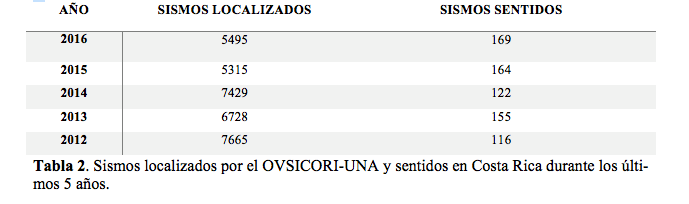
In Costa Rica, just over 5,500 events were identified, of which 162 were reported as being felt by the population, said a report by Esteban J. Chaves, Floribeth Vega and Marino Protti, scientists at the center.
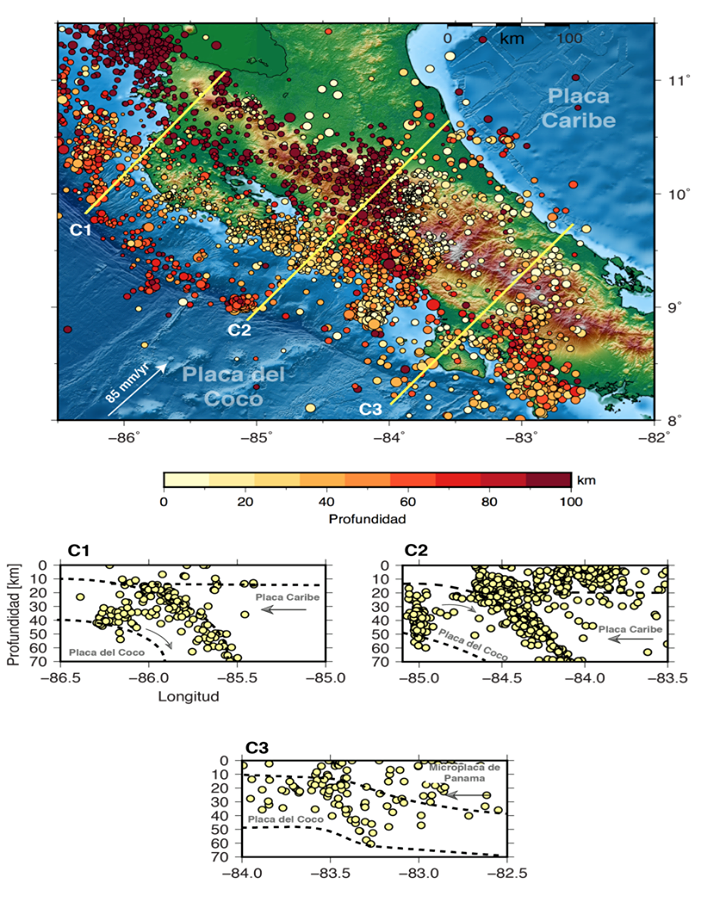
The greatest number of earthquakes felt by the population occurred in July due to the occurrence of the Bijagua, Upala earthquake on July 2 with a 5.4 magnitude. This was the largest magnitude event during 2016, and was caused by a local fault system at a depth of 7 km.
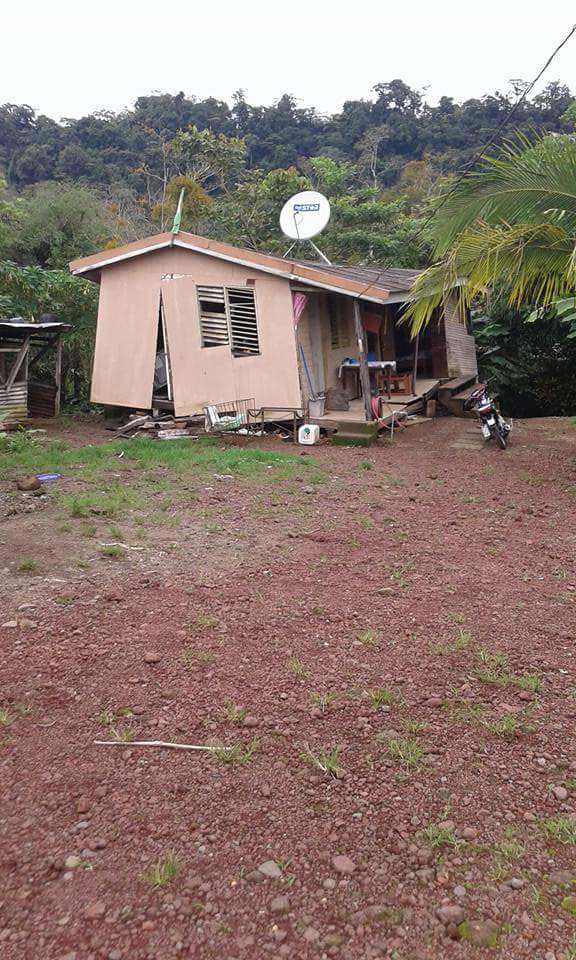
On the other hand, the 5.3 magnitude earthquake that occurred on November 30 at 6:25 p.m. northwest of Capellades, Cartago, caused small landslides and damages to at least 60 houses according to information from the National Emergency Commission.
The Cartago earthquake generated about 1000 replicas, hence during December a large number of localized earthquakes were recorded. This quake was located on a fault that since September 5, 2012, when the large Nicoya peninsula quake struck, has caused earthquake swarms.
The large number of earthquakes during 2012 is associated with the occurrence of the Nicoya earthquake on September 5 of that year. Its sequence of aftershocks and seismicity triggered earthquakes in other parts of the country, said the scientists. During 2012 at least 7,665 earthquakes in Costa Rica were recorded by Ovsicori-UNA, the most in the past five years.



