


 SIGN UP FOR OUR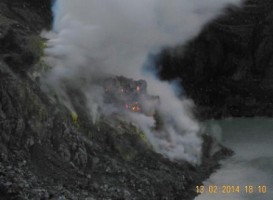
Crater Dome at Poas Volcano. Source: RSN
Volcano tourists rejoice: The Central American portion of the Ring of Fire is currently on fire, and volcanoes in Costa Rica and Nicaragua are showing off their natural beauty and power with sulfur emissions, red-hot glowing walls, phreatic (ground water eruptions), and even seismic events from deep within. The colossi in question are the Poas and Turrialba Volcanoes in Costa Rica and the San Cristobal Volcano in Nicaragua.
According to reports by the National Seismology Network (Spanish initials: RSN) of the University of Costa Rica, the Poas Volcano in the province of Alajuela has confirmed that this colossus is in fact spewing sulfur columns from chimneys that have recently formed on the inner crater walls, which are glowing red-hot at night (PDF report in Spanish). The Poas Volcano is one of the most active volcanoes in Costa Rica; it features a perennially hot lagoon that is often subject to phreatic eruptions for the enjoyment of visitors.
Geologists monitoring the crater dome of the Poas Volcano noticed that in late December the temperature had jumped from 300 degrees Celsius to 500. Last month, park rangers noticed that the incandescence was already glowing red. By mid-February, the activity shifted to molten rocks that caused mini landslides. Extra tourist bonuses at this time include rainbows forming inside the crater. Sulfur columns are more common now; to this effect, the Costa Rica Star has previously published warnings of potential health risks to visitors.
The Turrialba Volcano in the province of Cartago started acting up in early January with ash columns and chimney temperatures around 460 degrees Celsius. Visitors to this national park may get some bonus seismicity during their tours since this region sits on an earthquake cluster, but the volcanic activity is producing a substantial amount of acid rain that often limits access to the volcano. In this sense, the Poas Volcano is a better option for tourists than the Turrialba Volcano since there are no acid rain warnings -at least not at this time.
The most iconic volcano in Costa Rica, the Arenal Volcano, woke up last year after a long dormant period and features the occasional vapor column and plumes of smoke and ash. Visitors should understand that there are always risks involved when visiting active volcanoes in Costa Rica, but none thus far has been as fearsomely active as the San Cristobal Volcano in Nicaragua, located northwest of Managua in Chinandega.
As recently reported by Diario Extra, this colossus has produced 13 seismic events in just a few hours, and one of those quakes was measured at 4.1 on the Richter scale. No eruptions have been reported, but visitors should heed all safety warnings issued by Nicaraguan officials.



