


 SIGN UP FOR OUR
 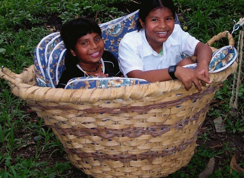 Ticos often wonder why nice people like Barry and Nanci Stevens come to Costa Rica and devote so much of their time, energy and passion into helping our country become an even nicer place than it already is. Barry and Nanci are the founders of El Puente (The Bridge), a non-profit organization that is dedicated to making the lives of the people of Puerto Viejo de Talamanca in Limon a little better each day. Puerto Viejo is located in the Southern Caribbean region of the country, and it is home to the largest population of the Bribri indigenous people, one of Costa Rica’s main native ethnic groups.
The Bribri are the people who are most benefited by El Puente’s activities, and they are indisputably some of the most deserving. El Puente runs a few projects that seek to empower the Bribri people, including educational, nutritional and financial programs. While all of El Puente’s projects are of extreme benefit, this article focuses on El Puente’s ingenious Microloan Program.
In Costa Rica, the sad “provincia olvidada” (forgotten province) label that has been applied to Guanacaste in the past is now being applied to Limon. In terms of economic development, Guanacaste is a shining example of what can be accomplished by adopting smart strategies such as nature conservation, leveraged real estate, smart tourism initiatives, and community empowerment.
Guanacaste has certainly come a long way since the days as a forgotten province. These days it enjoys near-privileged status as a haven for ecotourism, many of its beaches enjoy the coveted Bandera Azul (Blue Ecologic Flag) program, surfers from around the world flock to its beaches, and a few members of the glitterati have made it their home. The list of achievements doesn’t end there; Guanacaste is also home to the burgeoning medical tourism industry, and to that extent the two major health care facilities Hospital CIMA and Clinica Biblica are expanding their operations to Liberia. The Daniel Oduber Quiros International Airport is likewise greatly expanding its capacity to accommodate more tourists arriving on direct flights from all over the world, and prominent aerospace company Ad Astra -the brainchild of former NASA astronaut and national hero Franklin Chang Diaz– calls Guanacaste home for its Costa Rica-based operations.
All the above-mentioned achievements for Guanacaste have largely escaped the province of Limon, which holds the distinction of having being discovered by Columbus in the 14th century 15th century (thanks to Michael Rowland for the comment below to correct the date error on the discovery). Limon is also one of the provinces with greater ethnic diversity, being home not only to the Bribri, but also to the largest concentration of Afro-Caribbean people and culture. As a result, Limon is rich in language and culture. The county of Talamanca is, sadly, one of the poorest regions in our country. There are many reasons why poverty has become a stubborn mainstay in Talamanca, and one of them is the Bribri’s lack of access to today’s sophisticated world of finance. While the rest of the country has reasonable access to banking and loans, modern financial systems are virtually non-existent in remote parts of Talamanca.
The Microloan Program from El Puente is based on the economic principles established by Grameen Bank in Bangladesh in the mid 1970s by Nobel Peace Laureate Muhammad Yunus. Microloans are tiny loans -at least in comparison to the loans and personal credit offered by major institutions such as Banco Nacional- that do not follow traditional underwriting practices. Since these are loans made for charitable and empowerment purposes, they do not require collateral sureties and their interest rates on repayment are significantly lower than on loans offered by major banks. Regardless of their seemingly unconventional underwriting, microloans are notable for their high rate of repayment and profit potential. Microcredit operations have been held as being far more beneficial than charitable donations and grants. The idea is to promote financial education and to inject small measures of the free market economy, such as repayment responsibility and budgeting, to the target communities.
Microfinancing isn’t limited to underdeveloped regions such as Bangladesh and Talamanca. Grameen Bank has opened a branch office in the United States, a great idea in a country where millions have been affected by the global financial crisis. The University of Michigan has researched the positive influence that a strong microcredit system can have on economic development in the American inner cities. Microcredit is credited with launching web platforms where peer-to-peer credit systems leverage the use of online social networking, such as Kiva. Microlending has also inspired innovations such as Electronic Wallets, which in the future could facilitate the transfer of funds to Talamanca and other remote rural communities through mobile text-messaging.
El Puente doesn’t simply hand out cash to anyone; loan candidates are evaluated for their entrepreneurial spirit and the positive impact that their business idea can bring to the community. Financial concepts such as budgeting, saving and building creditworthiness are introduced, and for many applicants it is their first time learning about such topics. The small loan amounts -between $20 and $400- are pooled from capital reserves built up by El Puente through donations and revenue from interest collected.
What can the Bribri do with such small loans in our country? After all, Costa Rica’s stumbling path towards development is leaving some people behind due to free market constructs such as inflation and high consumption. Even in the Talamanca region, the maximum loan amount of $400 isn’t that much. The idea is to take the sound concepts of the free market, such as budgeting, savings, and financial responsibility, and teaching the Bribri to adapt them to their lifestyle. There will always be detractors, to be sure, like David Roodman’s new book Due Diligence: An Impertinent Inquiry Into Microfinance. Apparently there is an ugly side to everything, and microcredit isn’t impervious to life’s complexities, such as reports of microborrowers in India who have fallen into despair and committed suicide over their inability to repay their loans.
Everyone needs a helping hand, and some -like the Bribri- more than others. Thanks to El Puente and other organizations that are often lead by foreigners, many Ticos can hope to catch up to others who have found their place in a society that’s being changed by capitalism and free markets. The Costa Rica Star herewith applauds El Puente’s work in Talamanca and urges readers to find out more about their work and how the can help by visiting their website.



