


 SIGN UP FOR OUR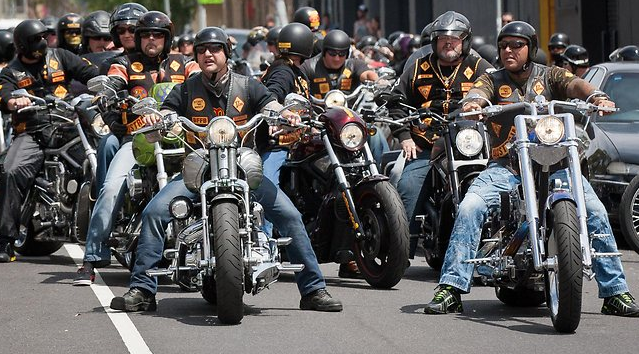
Photo of the Bandidos Motorcycle Club members with their Harley Davidson Motorcycles
It all started with the Bandidos Motorcycle Club from Texas opening a chapter in Costa Rica in 2004. These days, there are the Gitanos, Coyotes and other two-wheeled syndicates whose members show a predilection for tattoos, facial hair, leather jackets, Black Sabbath, and high-performance spark plugs. Should residents of Costa Rica be worried about this propagation?
For all the reported criminality associated with motorcycle riding clubs, biker gangs in Costa Rica are nothing like the Mara Salvatrucha (MS-13) or the Mexican drug cartels that have been trying to get a foothold here. International biker gangs such as the Hells Angels have been associated with criminal activity, but people seem to forget that these are large societies; as such, crime is bound to surface at some point. Is there not corruption and crime found among large subsets of society such as government workers and law enforcement?
What is interesting about the adoption of the style, attitude and customs of motorcycle club members in Costa Rica is that, in a certain sense, there is little affinity to draw from. The roots of the Hells Angels and the Bandidos can be traced to military war veterans from the United States. Costa Rica does not even have an army, but self-respecting Tico Bandidos know about the late Don Chambers, a Vietnam war veteran who sought to bring the battlefield doctrine of the United States Marine Corps into the motorcycle riding lifestyle.
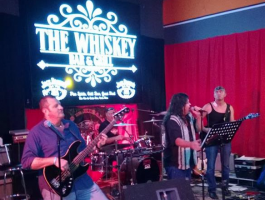
Every Sunday at The Whiskey Bar and Grill is Live Music and Jam Sessions
Camaraderie is an important aspect of the biker gang lifestyle that Tico motorcycle clubs have easily adopted. This can be seen at the Whiskey Bar in Santa Ana, where expat and local bikers often meet to enjoy tales of the road, the widest selection of whiskey in Central America, and ice-cold beer.



