


 SIGN UP FOR OUR
Click image to enlarge

Editor’s note: The views expressed by guest columnists are not necessarily those of The Costa Rica Star, its advertisers, or its staff.
The federal emergency management response to both Hurricanes Harvey in Texas/Louisiana and Irma in Florida will seal the fate of President Donald Trump and his team at FEMA. They will be judged on how well they coordinate with state officials on all levels for however long it takes to bring these communities up to speed and lives returned to normal. The task at hand is large with consequences. The awful memories of the federal and state response to Hurricane Katrina in 2005 in Louisiana, Mississippi and Alabama are still fresh and they haunt millions of survivors.
Last week President Trump secured from the U.S. Congress $15 billion in emergency funding for recovery efforts in Texas and Louisiana. This is just a down payment on what’s to come. Estimates run as high as $180 -200 billion in damages to public infrastructure and uninsured property losses. On top of these figures are damages from Hurricane Irma that hit the Florida Keys Saturday morning as it made its way north up the west coast engulfing coastal Tampa with high storm surge and tearing up the region with hurricane-force winds. The handwriting is on the wall that Irma will top Harvey as the most costly natural disaster.
On mainstream media Hurricane Irma storm coverage has been practically non-stop and so will recovery efforts. The state governors of Texas, Louisiana and Florida so far are to be commended in their efforts to coordinate search and rescue and bring back power and water. Texas and Louisiana are faring pretty well given Hurricane Harvey which is now described the USA’s mostly costly hurricane in terms of financial loses, but not in lives – that distinction goes to the 1900 unnamed hurricane that hit Galveston, Texas killing an estimated 8,000 to 12,000.
The death toll attributed to Hurricane Harvey stands at 70, but that number could rise, according to the Associated Press. Katrina claimed an estimated 1,200 to 1,800 lives. Why only 70 dead in Harvey? The key is preparedness and quick response from all first responders with enough resources to handle the situation. The federal, state and local response to Harvey has been admirable. Hurricanes just don’t happen spontaneously like tornadoes. With today’s weather-forecast technology we see them coming. There is time to prepare and evacuate.
The in-your-face effects of Hurricane Irma in Florida are expected to last through Monday as the storm moves all the way up Florida and into Georgia. At this point fatalities and damages are unknown with the entire state in Irma’s path from the panhandle to Miami. There are an estimated 75,000 people in public shelters in South Florida alone. These people could not or would not evacuate. There are always those fools that ‘ride out the storm’ with a hurricane party. Many of them end up dead.
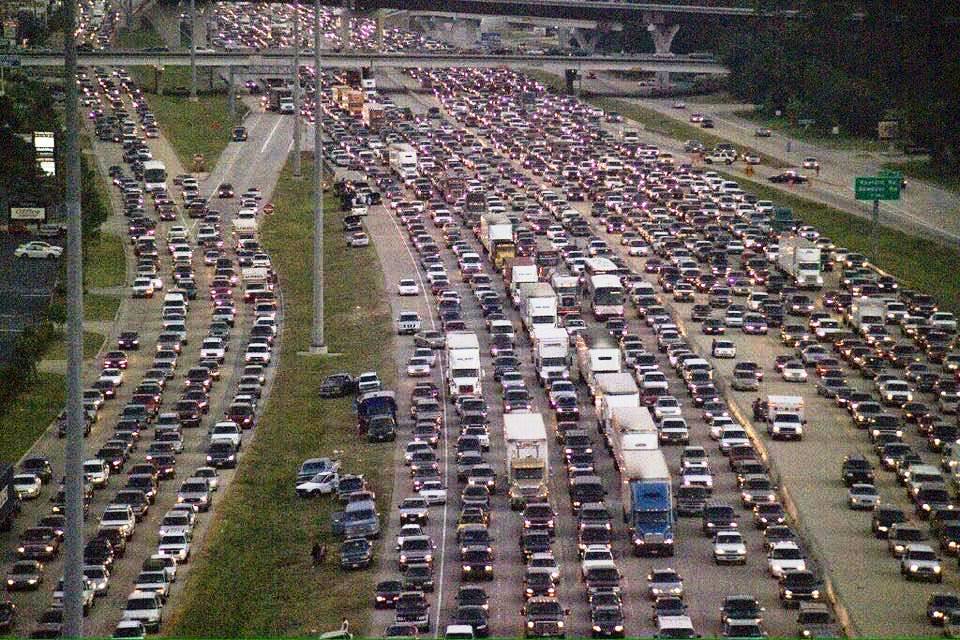
One of the dangers of living in Florida is that the state is over populated in many areas and is often hit by hurricanes. It’s difficult to evacuate Florida. Everybody waits until the evacuation order comes and by then it’s deadlock on the highways. The point is with the current scenario concerning Hurricane Irma, there are many ways for something to go horribly wrong — no matter how much you prepare for the worst — resulting in multiple deaths and injuries.
Federal, state and local emergency responders must be ‘all hands on deck’ and ponce just as soon as Irma moves up state to begin search and rescue saving as many lives as possible. The whole world is watching this response to Hurricane Irma. Even in Costa Rica, Americans from Florida or with family there are glued to bar and restaurant TVs watching CNN, Fox News or Miami news for the latest storm developments.
Over the weekend huddled up at Camp David were President Trump and his entire cabinet as they monitored the storm and coordinated federal resources for immediate deployment. Florida Gov. Rick Scott says he is in constant contact with the president, the cabinet and his FEMA team. Scott, meanwhile, is giving continuous up dates to the public with his emergency management team at his side. All 17,000 members of the Florida National Guard have been called to duty from one end of Florida to the other. Scott is also asking for volunteer nurses and others with access to boats to come forward and respond when appropriate.
Once the storm passes the fight for survival begins. Not just on the local level but politically as well. The late Speaker of the House Tip O’Neill once said, “All politics is local.” President Trump and Gov. Scott will soon be judged based upon not only the level of response but its success.
P.S. In South Florida electrical power is out providing no TV news. Cell phones and newspapers are also useless. Leave it to good-old-fashioned AM and FM radio stations simulcasting the audio of Miami’s TV storm coverage providing important information to the masses. Nobody much listens to AM or FM radio anymore, but South Florida is listening now.
About the Author
Britt Nelson relocated to Costa Rica in 2011 from Florida, where he served as news editor for the Palatka Daily News, a newspaper owned by the New York Times Regional Newspaper Group (NYT-RNG) for 20 years.
Nelson served the NYT-RNG for 18 years in Tennessee, Kentucky, Virginia, North Carolina and Florida as a correspondent, reporter, staff writer, senior staff writer training new reporters, copy editor, page designer, editorial writer, editorial page editor and editorial board member.



