


 SIGN UP FOR OUR
 By Wendy Anders
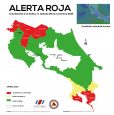
A map of the emergency status of Costa Rica’s regions as of late Saturday, source National Emergency Commission.
A total of 22 communities in southern Costa Rica are virtually unreachable by road following the passage of Hurricane Otto, the head of operations of the National Emergency Commission (CNE), Walter Fonseca, reported yesterday.
“These are eight communities in the canton of Osa, and fourteen in Golfito, also in the south. In addition to these, we have two reported in the indigenous area of Turrialba,” said the official.
Fonseca said that all communities have been reached by air operations which delivered food and medicine. Saturday, flights arrived in Golfito, and Sunday, settlers of Alta Talamanca near the Caribbean were visited.
Communities in Golfito also received a medical team from the Costa Rican Social Security Fund that will provide medical care for 10 days.
Rains that started pelting the southern region in the middle of November were exacerbated by Otto, and are still lingering in this next round of unstable weather conditions making access roads to these remote communities virtually impassable, said Fonseca in a public address.
Reinaldo Carballo, spokesman for the CNE, explained that most of the communities are very isolated indigenous communities with enormous distances between them, which normally take two to three days to traverse on paths.
“They are rural roads where, in some cases, there are not even bridges. Almost always when it rains, they get cut off,” said the spokesman.
Carballo said that it is still very difficult to estimate when the areas will be reconnected to main roads as this depends on weather conditions and the amount of resources municipalities have to repair the road damage.



