


 SIGN UP FOR OUR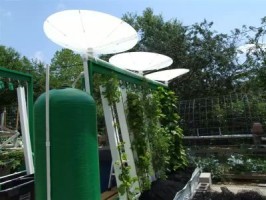
Source: RainSaucer
As the high tourist season approaches its apex in Costa Rica, water shortages in Guanacaste are becoming more frequent. Waking up to hear the dismal gurgling sound of a faucet running dry is something that many residents of Guanacaste are currently dealing with. The situation should improve once the green (rainy) season begins, which would be a perfect time to explore rainwater harvesting options.
It was about two decades ago when dot-com millionaires from the United States discovered Guanacaste, which back then was known as the “forgotten province” of Costa Rica. These days, Guanacaste is home to lavish tourist resorts, luxury real estate and a growing expat community. For tourists and expats, Guanacaste offers high quality of life in just about every aspect except water.
Neighbors in communities across Guanacaste have come to dread the high tourist season as they claim that the arrival of tourists and seasonal residents prompts utility managers to divert resources to ensure that hotels, luxury condominiums, golf courses, marinas, swimming pools, theme parks, etc., have enough water.
According to a 2008 proposal by Gabriel Murillo Morales, a civil engineer in Costa Rica whose opinions have appeared in various publications such as Semanario Universidad, the biggest problem in Guanacaste is that drinking water is being used for just about every purpose except crop irrigation. Treated water is being used in Guanacaste each time a tourist flushes a toilet, or when hotels wash their linen, or when cars are washed, etc.
Mr. Murillo thinks that Guanacaste, which gets about 1,500 mm of rain each season, could benefit from a harvesting strategy that would turn roofs and gutters into a catchment system. Such a system is described by the Campus Center for Appropriate Technology of Humboldt State University in California:
The rainwater catchment system is based on collection of rainwater and gravity flow pressure principles. Rainwater runs off the roof […] into rain gutters. The gutters channel the water and empty it into a standpipe. When the standpipe has reached its capacity of 150 gal, the overflow runs through a pipe and empties into a 900 gal drum. Two 300 gal barrels collect the overflow from the 900 gal drum and any other overflow drains to the public sewer system.
There’s also the RainSaucer system, which can be deployed on a household basis:
Made in the U.S.A., the patent pending RainSaucer™ is a rain barrel accessory that allows you to harvest rainwater…
– Cleanly: with a cleanable, food safe catchment system.
– Anywhere: you can place the barrel wherever there is rain falling.
– Simply: it sets up in 10 minutes with no tools required.
Public utilities can also manage rainwater harvesting operations at the municipal level with commercial-grade systems. Engineering firms such as Wahaso in the U.S. have accomplished this in Illinois:
Working closely with architects Booth Hansen of Chicago, the Wahaso team designed and built a rainwater harvesting system that will flush toilets in the building more than 90% of the time. The system captures rainwater from the 10,200 square foot roof into a 4,200 gallon underground Atlantis D-Raintank system. Water from the cistern is pumped to a processing room and day tank where it is filtered, chlorinated and pressurized to flush all the toilets in the building. The smart control system automatically reverts to the municipal supply when the cistern is empty, or a problem is detected with the processing system.
Guanacaste is currently a prime candidate for rainwater harvesting in Costa Rica not just because of the numerous water issues but also because of climate change. Meteorologists are expecting impressive rainstorms in Guanacaste this green season, but at a lower frequency.



