


 SIGN UP FOR OUR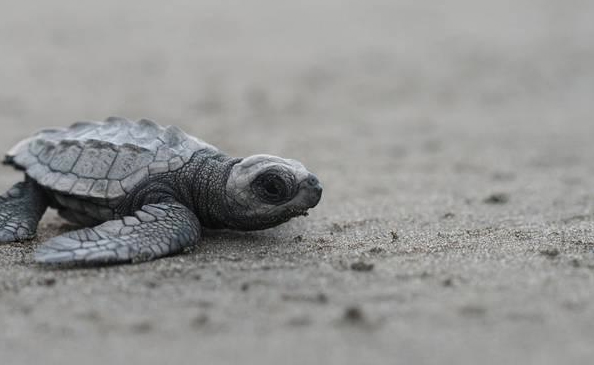
Learning about sea turtles in Costa Rica, eight Regina students also learned about environmental conservation and how it can benefit Saskatchewan.
The students, along with a parent volunteer and Jolene Siemens, a Regina teacher and recruiter for the trip, travelled to Costa Rica on June 29 to participate in a 10-day program with the International Ecology Project, during which they learned about leatherback sea turtles.
“I think … the experience of seeing any wildlife up close is an eye-opener for a lot of kids,” said Siemens. “I think a lot of our kids, especially in the city of Regina, if you haven’t lived on a farm or got out of the city very much, you may not experience something that close.”
In their time learning about leatherback sea turtles, the students took in lessons about the environment that can be applied back home.
“I’m going to be more aware of how to use less energy,” said Sarah Flottorp, a Grade 11 Dr. Martin LeBoldus High School student who participated in the trip.
The group also learned about chemicals used in banana plantations in Costa Rica, which they compared to agricultural chemicals used in Saskatchewan.
Siemens recruited students from high schools across Regina. The students, Erin Husack, Kaitlin Lindblad, Isaac Ziegler, Madeline Bote, Corey McCowan, Devery Wild, Stephanie Witham and Flottorp, ranged from grades 9-12.
The experience allowed the group to spend time in the rainforest, where they helped band bats, identify plants and species and hiked at night.
From the rainforest they moved to the beach, where they stayed at a nature research station and learned about the leatherback sea turtle.
They participated with researchers in data collection by examining old nests and investigating unhatched eggs, measuring temperatures of sand and patrolling the beach at night.
The group had the opportunity to see a leatherback turtle lay her eggs, and moved the eggs to a nest they’d dug in a safe location.
“That was cool. We got to measure her and observe what they did,” said Flottorp.
That same evening, the group witnessed newly hatched turtles make their journey to the ocean.
“We just basically crawled along behind them and made sure that no crab came out of the sand to get them,” said Siemens.
This was the first Saskatchewan group to take part in the International Ecology Project, and the second from Canada. Siemens said it’s an opportunity she’d like to take again, but would fundraise to allow more students to go. This year’s participants paid $2,175, as well as the cost of flights, to take part. But according to Siemens, it was worth every penny.
“It was quite an adventure,” she said.
Source: Leaderpost.com



