


 SIGN UP FOR OUR
According to recent research by the University of Costa Rica (UCR), 80 percent of residents in the San José, Costa Rica Greater Metropolitan Area (GAM) can’t afford to buy the new houses, apartments and condominiums being built and sold in a recent real estate boom.
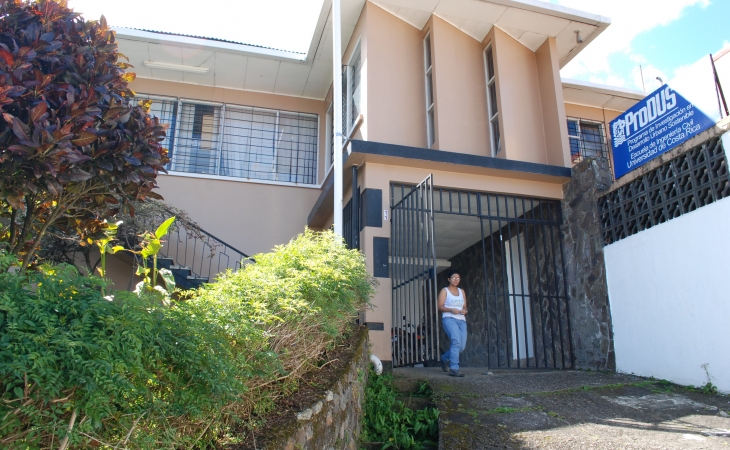
The latest data from the National Institute of Statistics and Census’ Household Survey (2015) was compared with housing prices, and bank requirements for financing in a study conducted by civil engineering student, Carlos Gonzalez Sicard, under the direction of Luis Zamora González, director of the UCR Research Program on Sustainable Urban Development (ProDus-UCR).
The research found that the current housing supply in the metropolitan area “is not truly inclusive,” forcing low-income households to seek smaller, subsidized housing options.
The findings of the study led Gonzalez to question why such a large quantity of unaffordable housing was being built, and why developers were not tailoring their constructions to fill an existing demand among lower-middle and middle-class families for housing.
“There is a market segment, that until now has hardly been exploited, that could opt for a housing solution if the conditions were more accessible,” the report concludes.
The research pointed out that prices for new housing units are high and their areas are small. For example, a new apartment building in Pavas offers 33 m² (355 sqft) units for approximately 50 million colones ($88,000 USD) , an area that is insufficient for a family with children.
The UCR study also recommends further analysis on the topic of residential construction to understand,”The socioeconomic conditions of people or families who are currently buying housing projects to determine, for example, whether they are nationals or foreigners, couples, small families or even people who are not in need the housing but purchase it as a rental property.”
The most affordable housing projects were found in the districts of Ulloa, Alajuela, Pavas, Purral, San Antonio de Alajuela and San Rafael de Alajuela, while the most expensive housing projects were located in San Francisco de Heredia, Escazú, Pavas (Rohrmoser), Santa Ana, Mata Redonda and San Rafael de Escazú, according to the study.
Currently it appears that the vast majority of buyers of new housing units are, “people who have already satisfied their own housing needs, and take advantage of market conditions to make a profit. For example, it is common to see in both the most exclusive residential projects, as well as in the most accessible, there are people who own several housing units and make them available as rentals.”
The study was entitled, “A spatial-temporal analysis of residential buildings in the Greater Metropolitan Area between 1995 and 2014.”



