SIGN UP FOR OUR
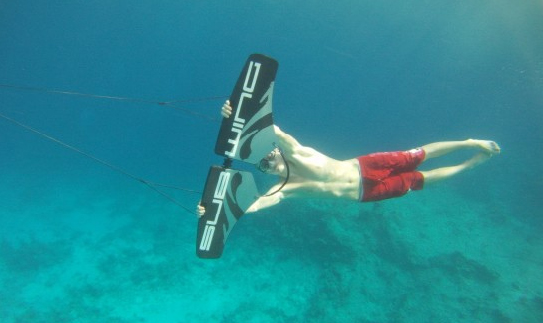
For all of you who have lived in and around Costa Rica for awhile now, you have undoubtedly experienced water skiing, jet skies, surfing, and other water sports. While, make sure you are sitting when you read the rest of this, imagine flying under water with a totally new water sport experience called, SUBWING.
SUBWING is a product invented by 20 year old Simon Sivertsen during a sail trip in the Mediterranean, summer 2010, and started originally as a single piece of driftwood.
The SUBWING
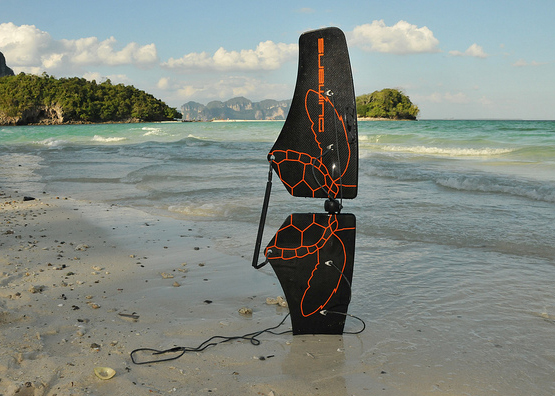
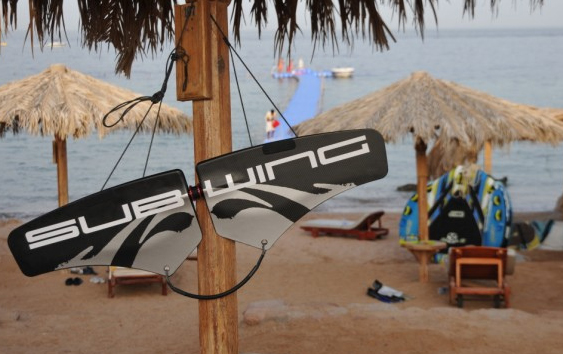
The SUBWING is basically two connected wings that can be rotated independently of each other, which are being towed by a boat with a person hanging on. The speed varies about 2-4 knots, which means that even a small boat with a less powerful engine will have no problem towing the SUBWING. The first prototype consisting of two rotatable wings was made at sea by material found at a supermarket. Later, many more prototypes has been created and tested.
The company
The Norwegian company SUBWING was created in the spring of 2011, by Simon Sivertsen and his father Kjetil Sivertsen.
SUBWING AS
Holskogveien 48
4621 Kristiansand
Norway
Email: [email protected]
Internet page: www.subwing.com
Telephone: +47 414 94 275 Mats Westgaard (Marked & Sales coordinator)
Useful facts regarding SUBWING
-SUBWING consists of two wings which can be rotated independently of each other, and are being pulled by a boat with a rope.
-SUBWING works like wing rudders on an airplane; you control it by tilting the wings in different angles.
-SUBWING is designed so it can be dismantled in the mid mount.
-SUBWING uses Dyneema rope (the world’s strongest rope) for maximum durability with minimum maintenance.
-SUBWING is made in carbon with a hollow design filled with foam that it floats easily.
-The rope attachments on the wings are mounted so that it becomes a force balance between the force from the rope and the force from the person who hangs on. Therefore it does not require much strength from the wrists to operate the wings.
Because of this you almost don’t use any muscles when operating the SUBWING, and as a result you can hold your breath for longer.
-SUBWING has a rear grip that can be used to equalize ear pressure or whenever a hand is needed.
-A beginner will usually only be underwater for about 10-15 seconds and will dive down to about 3 meters in depth. When one receives more training and can use the rear grip to equalize the ears, you can go deeper.
-SUBWING is designed so that the head will be well above the water when lying in surface position.
-Normal length of the rope between the boat and the person in the water is about 10 to 20 meters, the longer the rope, the deeper it is possible to dive.
-Normal depth that is “easily” achievable after some training is 5 meters and below.
-Normal speed when operating the SUBWING is 4- 2 knots, it is possible to go faster, but the pressure on the neck from the water resistance on the head will be noticeable.
-Using a snorkel is possible, but it is recommended to use a smaller, more streamlined snorkel to reduce the forces that pulls on the snorkel
-In colder water when using a wetsuit, it’s a good idea to place the collar of the hood on the outside of the suit to prevent it filling with water.
-Normally a diving mask is the only equipment used when operating a SUBWING
-SUBWING can be used by all sorts of people, from those who take deep dives and do thrilling “spins” underwater, to those who are most on the surface and at intervals take short dives.
-SUBWING is the first thrilling watersport you can tow behind a sailboat or a slow boat in general. The speed needed to use the SUBWING is only about 3-4 knots, so any sailboat with any engine capable of doing this speed (which is practically any) can be used to tow a SUBWING. It is important to mention that towing a SUBWING behind a sailing sailboat can be dangerous and is strongly discouraged because of the absence of being able to stop quickly.
-SUBWING has numerous patents pending.
For videos, pictures or more info
Homepage: Subwing.com
Facebook: Facebook.com/subwing
Youtube: Youtube.com/subwingsport
Flickr: Flickr.com/photos/subwingsport