


 SIGN UP FOR OUR
 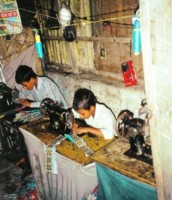 No one fails to admire the beautiful and often times intricate embroidery designs on those soft 100% Indian cotton shirts. Frequently embellished with hand-sewn beading, these skirts, shirts and accessories are largely sought after by the back-to-nature crowd wanting clothing made of natural fiber fabrics.
But just where they come from and at what cost are questions that many people are starting to ask with more urgency. Most compassionate people would not be as excited about wearing those garments that are produced at the hands of small children in deplorable conditions.
According to one estimate, more than 20 per cent of India’s economy is dependent on children, the equivalent of 55 million youngsters between the ages of 5 and 14. Many hours of demanding labor in poor light and unsanitary conditions might earn a child $1.50 to $2.00 for the day. India is recognized by the United Nations as the world’s capital for child labor.
The organization, Anti-Slavery International, states that textile businesses in India currently operate their locations in conditions approaching slave labor.
In the last few years the organization put several large scale retailers on notice that their contracted manufacturers were employing youngsters in their operations who are working excessive hours for unjust wages. The conditions that these young people have to endure is heartbreaking. Sometimes for weeks at a time the workers will not be allowed to leave and return to their families. Many of those children report working conditions where beatings and physical coercion are common place.
According to ASI and the Dutch human rights regulatory group SOMO, exploitation is prevalent in India’s textile industry.
These two international watchdog groups hope to persuade the Indian government to also reform the country’s apprenticeship system. Their goal is to shorten the apprenticeship time for textile workers from three years to just six months, after which they can then be paid a slightly higher wage. Some workers report working their entire internship without any pay at all.
In the Shahpur Jat suburb of Delhi the discovery of large numbers of children working in horrid conditions has government and human rights groups concerned about the large retail chains who are contracting the construction of their garments to India.
Some popular clothing giants like Gap claim to have been unaware that their lines of clothing were being produced in sweatshops using child labor. Their assertion is that the labor was subcontracted improperly to a firm other than who they were working with. Gap announced it had withdrawn the garments involved while it investigated breaches of the ethical code imposed by it three years ago.
Groups dedicated to stopping this shameful practice have discovered children in filthy rooms working on huge piles of beaded blouses marked with serial numbers that Gap admitted were consistent with its inventory numbering system. The company has pledged to convene a meeting of its Indian suppliers as well as withdrawing tens of thousands of the embroidered girl’s blouses from the market, before they reach the stores. The hand-stitched tops would have been sold for about $25.00.
In 2004, when Gap launched a social audit, discovering a multitude of abuses including forced labor, child labor, below minimum wage pay, and physical abuse. It added that it had terminated contracts with 136 suppliers as a consequence. In the past year Gap has severed contracts with a another 23 manufacturers because of workplace abuse.
“We firmly believe that under no circumstances is it acceptable for children to produce or work on garments. These allegations are deeply upsetting and we take this situation very seriously. All of our suppliers and their subcontractors are required to guarantee that they will not use child labour to produce garments. In this situation, it’s clear one of our vendors violated this agreement and a full investigation is under way.” According to a representative from Gaps main offices in San Francisco.
Professor Sheotaj Singh, co-founder of Dayanand Shilpa Vidyalaya, a Delhi-based rehabilitation center and school for rescued child workers, said he believed that, “As long as cut-price embroidered goods are sold in stores across Britain, America, continental Europe and elsewhere in the West, there will be a problem with unscrupulous subcontractors using children. It is obvious what the attraction is here for Western conglomerates. The key thing India has to offer the global economy is some of the world’s cheapest labor, and this is the saddest thing of all the horrors that arise from Delhi’s 15,000 inadequately regulated garment factories, some of which are among the worst sweatshops ever to taint the human conscience.”
In addition to Shahpur Jat, the small city of Tirupur is a thriving center for the Indian garment and textile business, with almost 3,500 apparel makers. Locals call the city “little Japan” for its dependence on exports. Half of the garments made there are shipped to the U.S.
Some social sectors of India still adhere to the practice of family members being responsible for the debts of another relative. In cases such as this, often children are forced to ‘work off’ the debt or are sold outright to a company owner as slave labor.
While wages in Costa Rica are noticeably lower than in countries like the U.S., the government here has set minimum wage requirements and protections regarding vacation, insurance, sick leave and other benefits. Even so, there are numerous cases of people working under the table for unreported cash. These workers are not enjoying the same labor law protections.
Sources: BBC, The Guardian, Wisconsin State Journal



