


 SIGN UP FOR OUR


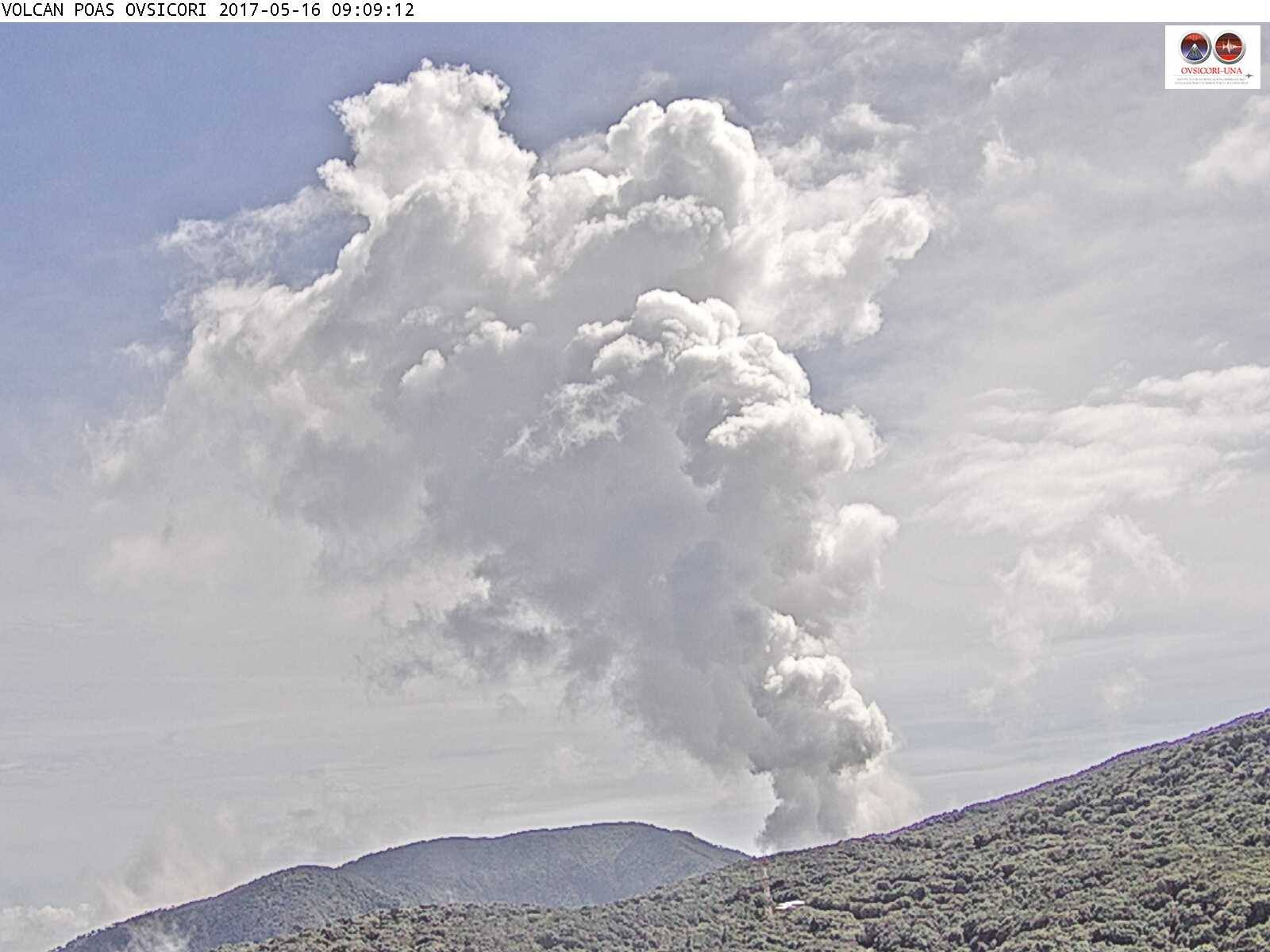
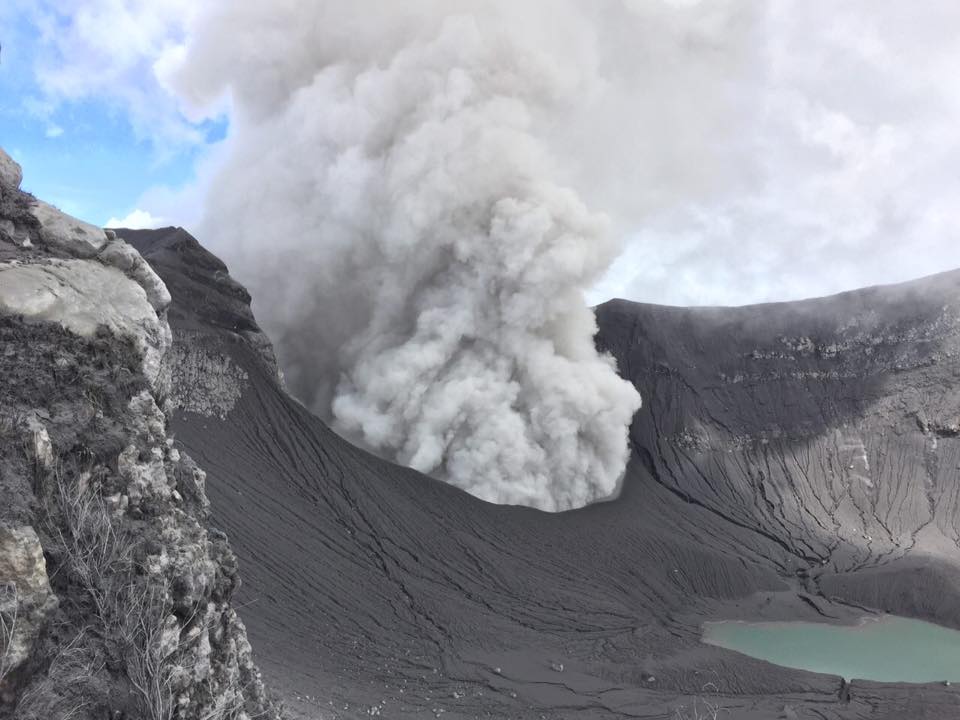
Are volcanoes in Costa Rica secretly conspiring to erupt simultaneously, or is there some science behind all the recent gas, lava and ash?
Scientists are looking at the connection between the recent eruptions of three volcanoes and the energy released along fault lines. Two tectonic plates meet in Costa Rica: the Cocos and Caribbean,placing the country soundly within the globe’s ring of fire, or most active volcanic region which spans into Asia and the western U.S.
The University of Costa Rica turned to experts Mauricio Mora and Guillermo Alvarado of the National Seismological Network (RSN, its initials in Spanish), who said that such activity, given the number of volcanoes in Costa Rica, is not unusual.
“It is not surprising that the three volcanoes are showing so much activity,” said Mauricio Mora at a recent forum. Although the precise relationship between one volcano and another has not been identified, he explained that, “What can exist is a macro geological process due to the subduction zone of the Cocos plate under the Caribbean. The dynamics of plate tectonics is the common motor that feeds and energizes the volcanic mountain chains, not only of Costa Rich but throughout all of Central America from Mexico to South America.”
Retracing a bit of geological history, Alvarado recalled that Costa Rica has had five active volcanoes since the colonial (Spanish) period, and at least 10 have been active at some point during the last 10,000 years. These are: Rincón de la Vieja, Miravalles, Arenal, Chato, Poás, Hule, Río Cuarto, Barva, Irazú, and Turrialba.
The scientists recalled that the last time there has been simultaneous activity in three active volcanoes – Arenal, Poás and Rincón de la Vieja – was 30 years ago, in 1987.
Records show that a similar pattern occurred in 1969 and also in 1975.
Researchers say that such bursts of activity “follow a normal cycle of plate tectonics, where seismicity and volcanism can increase in tandem at certain times.”
Alvarado said he did not foresee any large movements of magma during the present eruptive phase of the active volcanoes – Turrialba, Poás, and Rincón de la Vieja.
However, that doesn’t mean the effects of even smaller eruptions are insignificant. In the past couple of years, livestock, crops, electricity, people’s, and travel have been disrupted in different ways. Costa Rica’s economy took at hit in 2016 when the international airport near San José was closed due to ash from the Turrialba volcano.
The current status of the three active volcanoes
The Turrialba volcano’s latest active period began with an eruption in January 2010, and its largest eruptive phase began October 30, 2014. So far in 2017, its behavior has been characterized by variable eruptive intensity. Some eruptions have been shorter and others more prolonged, interspersed with periods of calm, but none as energetic as those between April – December 2016, in which solid material was thrown out from the crater.
Scientists said the Turrialba volcano currently behaves like an open system, which means that it has passed the stage of opening up conduits which took about six years and, therefore, it can erupt more easily without presenting any clear warning signs before an eruption, said the UCR scientists.
The Poás volcano has shown similar behavior, with a strong acceleration of its activity, and very explosive and seismically energetic eruptions, but with a faster opening of conduits than was observed at the Turrialba volcano.
After the last explosive eruption on April 22, 2017, the Poás eruptions have been passive (non-explosive) and prolonged (several hours), with columns of ash that even become reddish due to oxidation.
“Poas’ explosive potential is high,” said the scientists, “and it can not be ruled out that eruptions of over 1km can occur again from the edge of the crater and into to the national park area.”
The Rincón de la Vieja volcano has increased its explosiveness compared to the activity it had in 2016. The main eruption so far took place on June 11, 2017 at about 5:32 a.m., and generated lahars (hot streams of ash, sediments and blocks) towards the rivers Pénjamo and the Sufrada ravine, with trails of up to 3 meters, said the scientists.
The UCR researchers said the activity at Rincón de la Vieja may continue in a similar fashion “because it seems that there is a process of opening of conduits, and according to the analysis of ash, there is presence of juvenile material.”
You can get live updates through the RSN on the country’s active volcanoes on their Facebook page.



